How to Ask Your Tarot Deck a Question Worth Answering
By Aldebaran Oracleborn
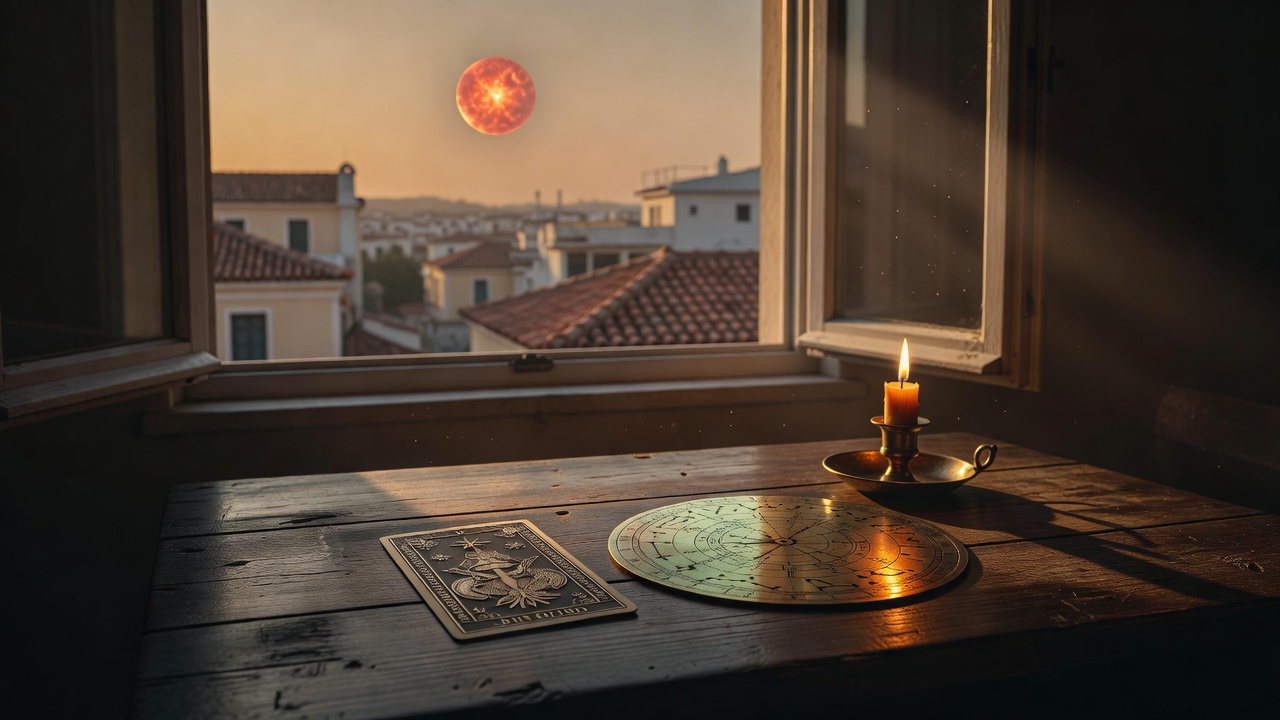
A woman came to my table in Athens last month with a question folded so many times it had started to tear. She wanted to know whether to leave her job, whether to move back to her mother, whether to say yes to a man she was not sure she liked, and whether any of this would make her happy. It was four questions wearing one coat, and she had brought it to the cards the way you bring a too-full suitcase to a small door. I read the stars for a living, and I read the cards the same way I read the sky: carefully, and never in a hurry. So I did not reach for the deck. I asked her to unfold the question first. This is the part nobody teaches, because it is not dramatic enough for a movie. But it is the whole art, and after thirty years of reading I can say it plainly: the cards answer the question you actually ask, not the one you meant to ask. Most people think a tarot reading begins when the
cards are shuffled. It begins the moment you choose what to ask. A reading is a conversation, and a conversation is only ever as honest as the question that opens it. Here is the method I wish someone had handed me when I first picked up a deck and tried to ask it everything at once. ## The Question You Bring Is the Reading You Get When the question is tangled, the reading is tangled, and the seeker blames the cards for being vague. I have watched it happen a hundred times. A person asks three things at once, draws a spread that pulls in five directions, and walks away saying tarot is nonsense because the cards contradicted each other. The cards did not contradict each other. They answered three different questions in three different voices, which is exactly what they were asked to do. The fix is not more cards. The fix is a cleaner question. Before any reading, I have the seeker write
the question down in one sentence and read it back to me out loud. In the speaking, the split shows itself. The sentence that begins 'Should I leave my job' and ends 'and also should I move' is not one question, it is a committee. We take the committee apart until a single, honest thing remains. That single thing is what goes to the deck. You cannot overstate how much this changes the answer. A card drawn for one clean question lands like a note slid under a door. A card drawn for a folded question lands like a handful of confetti. Both are the deck telling the truth. One of them you can read. ## Ask What, Not Whether The second discipline is the shape of the question. The cards are poor at yes and no and rich at what and how. 'Will I be happy if I leave?' is a question the deck cannot honor, because it asks the cards to be a verdict instead of a teacher. 'What is this job asking of me
that I keep refusing to see?' is a question the deck can sink its teeth into. The first demands a fortune. The second opens a conversation. I learned this the hard way, because I am a man who over-reads everything. My shadow, if you want the honest word for it, is overcommitting to meaning before I let myself rest. I can take a single card and spin nine interpretations out of it before I have even looked at the picture. Asking the cards 'what, not whether' was not just a technique for me. It was a way of learning to stop demanding that every sign carry the whole sky. A yes or no question is usually fear wearing a question's clothes. Underneath 'should I leave' is a quieter question: 'what am I afraid this choice will cost me?' That is the question worth asking, because it is the one you can actually do something with. ## Let One Card Be Enough Here is where my own failing becomes my best
advice. When a seeker asks one clean question, a single card is often the whole reading. I know this cuts against the modern taste for ten-card spreads and dramatic reversals. But a single card drawn with a clean question says more than a Celtic cross asked in a hurry, because the one card has room to breathe. The ancients did not need every star to navigate. They needed the one star that pointed north, and they steered by it through water they could not see. Aldebaran, the star I took my name from, has guided travelers for four thousand years because it does not try to be a whole constellation. It agrees to be one fixed, faithful point. A good question asks you to do the same: agree to be pointed, and let the one answer be enough. So before you reach for a second and third card to clarify the first, sit with the one you drew. Note what it stirs in you before you explain it. The urge to
keep pulling cards is often the same urge that tangled the question in the first place: the fear that one honest answer will not be enough to justify the asking. It is enough. Rest there a moment. ## A Three-Card Spread for the Question You Are Afraid to Ask When one card is not quite enough, I keep the spread small and pointed. Shuffle while holding the clean question. Draw three. The first card is the question as it truly is, beneath whatever you meant. The second is what stands between you and the answer. The third is what the question wants to become once you stop squeezing it. Three cards, one question, no more. Read them in order and resist the urge to reinterpret the first card in light of the third. Each card answers its own place. The spread is not a story you are allowed to rearrange. It is a conversation, and in a conversation you let the other person finish. That is the whole
method: one question, asked cleanly, answered in three honest voices, and then put down. ## Closing Reflection The deck is not a machine for telling the future. It is a mirror with enough patience to show you the shape of your own asking. When the reading is confusing, the question was confusing first. When the reading is clear, it is because you had the courage to ask one clean thing and mean it. So tonight, before you shuffle, write the question in a single sentence and say it out loud. Then draw one card, and let it be enough. The stars and the cards both reward the reader who knows when to stop reading. And if you sit with it a while, the answer you were afraid to ask for has a way of finding you anyway.