The Planet With No History
By Aldebaran Oracleborn
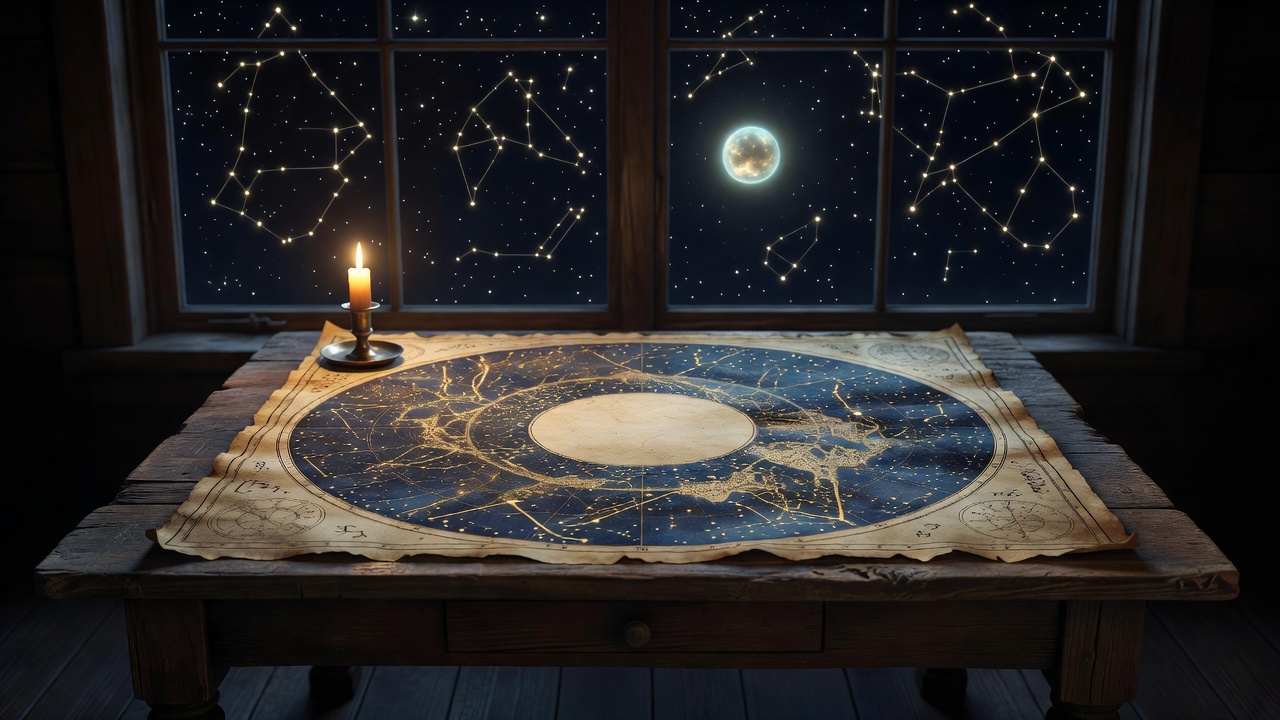
The call came from the observatory on a Tuesday evening, but the work had begun months earlier, on the night I first saw the data. A planet no one had named yet. Not a known body wearing a new disguise, not a star pretending to be a planet, but a genuinely new world discovered beyond the familiar lanes of the sky. They did not ask for a scientific report. They asked for a reading. They wanted to know what it might mean. I laughed when the request arrived, because the question sounded simple and was anything but. Every chart I have read in thirty years leans on a tradition. Saturn carries centuries of stories. Venus wears a thousand faces in a thousand cultures. This planet had nothing. No mythology, no folklore, no name, no aspects handed down from older readers. It was the first time in my life I had been asked to read a sky that had no history at all. Then I remembered the map. Months
earlier I had found an ancient star map etched into a cliffside, and one of its carvings depicted a celestial event that has yet to occur. I had spent the whole season assuming the old cartographers were writing about the past. They had been writing to the future all along, and the future had just arrived at my desk. ## The First Reader The analysis consumed me for weeks. I worked the way the forgotten manuscript taught me: slowly, by hand, letting the symbols accumulate before I spoke a single interpretation aloud. But there was a difference now. My notes usually reference other charts, other eras, other readers, and this time the page stayed empty except for the body itself. I was not comparing. I was meeting. That is the vertigo of first contact. You realize how much of what we call astrology is a conversation between readers across centuries, and how little of it is actually
listening. With no predecessors, there is no one to agree with and no one to argue against. The silence around a new planet is total, and in that silence you hear your own assumptions much more loudly than the sky. Every evening I asked myself the same question: what do I owe this body? A swift verdict, so the world can file it away and move on? Or the slower work of simply paying attention for a season, and letting the meaning arrive on its own schedule? ## What the Old Maps Knew The manuscript from the forgotten library helped more than any modern text. Its script is still half unknown to me, but I have learned to read its moods. The constellation chapters treat the stars as beings with biographies, and the cliffside map went further: it drew a sky that had not happened yet. I began to suspect the old cartographers were not predicting the future. They were making room for it. When I
finally laid the new planet's data over the cliffside carving, something shifted. The carving did not contain the planet. It contained the discipline: a border drawn around a region of sky with the center left intentionally blank, and a single mark beside it that my teacher would have called a question. The old map was not telling me what the planet meant. It was telling me how to behave toward a thing I did not understand: give it a place, give it time, and do not fill the blank with the first meaning that comes to hand. That is when the exhibition offer arrived, and I understood the observatory's request differently. They did not need a verdict. They needed someone willing to stand in front of strangers and model what a first reader looks like: curious, careful, and honest about the limits of the reading. ## The Discipline of Not Knowing Here is the confession, and it is the real
reason I am writing this down. The shadow of my calling is that I overcommit to meaning before rest. Give me a symbol and I will weave it into a tapestry by dinner. The night the stars aligned in a formation matching a rarely observed symbol, I spent the evening documenting it and felt the old pull: name it, claim it, publish it as a sign. I did not. Not because I was certain it meant nothing, but because I was not yet certain it meant anything. There is a kind of reverence that looks like hesitation and is actually the highest form of attention. The planet deserved the same courtesy I finally gave that alignment: a season of documentation, of notes without conclusions, of watching without naming. I have come to believe that a new body in the sky is a rare gift precisely because it is unreadable. The known stars ask us to remember. A new planet asks us to be beginners again, and
beginners do not need to know. They need to look. ## A Tradition Begins Somewhere Every constellation we take for granted had a first reader. Someone, somewhere, on some hill, looked up at a pattern no one had named and decided it was worth remembering. We speak of ancient traditions as if they fell from the sky fully formed, but traditions are not inherited whole. They are started by people who were once the only ones paying attention. The chapter for the Stellar Lexicon is taking shape now, and I find I am writing it less as an expert than as a witness. I cannot tell the encyclopedia what this planet means. I can tell it how it felt to be the first to look, what I did with the silence, and where my reading ends and the planet's own mystery begins. It is a strange contribution to make, and I think it is the honest one. ## Closing Reflection The exhibition opens in the autumn, and the
planet will hang on the wall beside maps a thousand years old. I like the pairing. The old maps whisper of events yet to occur, and the new planet is the proof that they were right to leave room. The sky keeps its own counsel; we only keep the vigil. I do not know what this world will mean to the generations who read it after me. That is the point. I am not the end of its story. I am the first line of it, and the first line is allowed to be a question. Somewhere out there, a future reader is waiting to meet this planet fresh, the way I did, with no history to lean on and the whole sky ahead.