Meditating in the Moon's Shadow
By Altair Seerstone
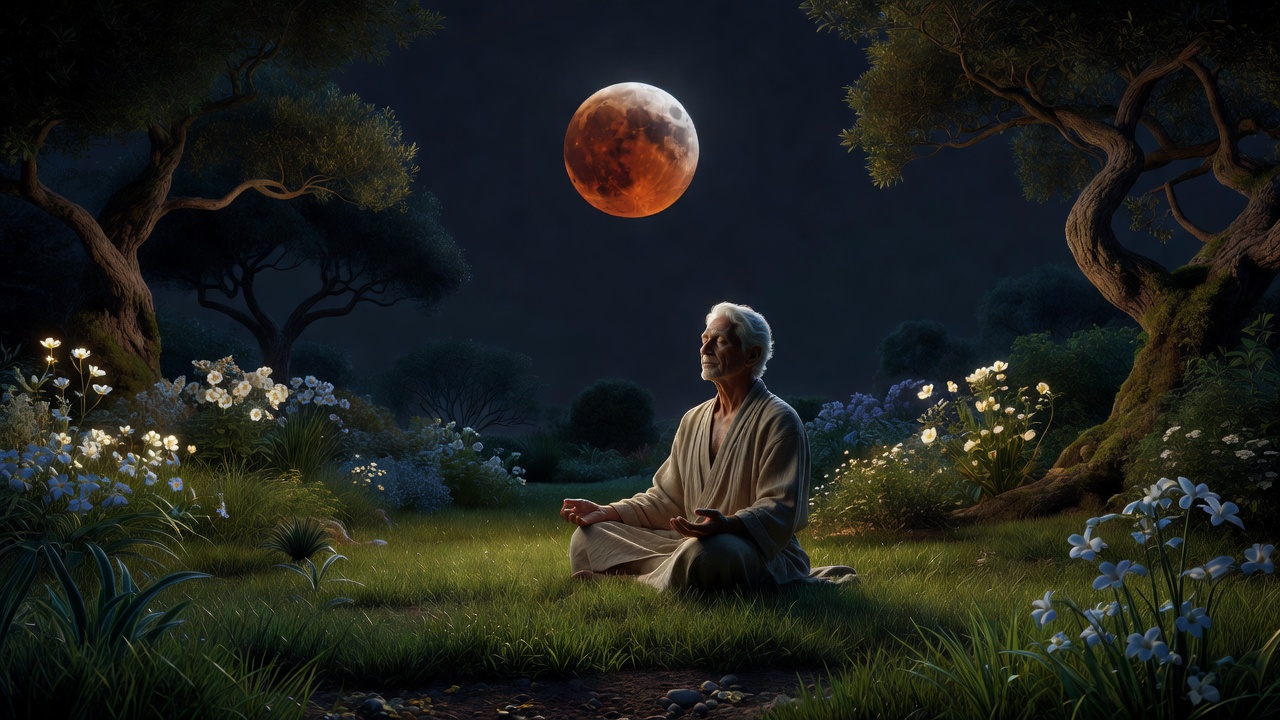
I have spent most of sixty years trying to read the sky. I know the constellations by name, and I have learned to wait for the quiet hours when the light changes and something unseen edges closer. But last week the sky did something I had read about for a lifetime and never truly understood until it happened over my own garden. A lunar eclipse is a slow event. The moon does not vanish the way a light switch goes out. It dims, degree by degree, as the Earth's shadow walks across it. I was sitting cross-legged on the grass, my eyes half closed, when I noticed the moonlight on my hands had gone the color of old copper. The garden knows more about phases than most calendars. The jasmine had just finished its second bloom of the season, and the tomato vines I had nearly given up on were heavy with fruit. I remember thinking, as the shadow deepened, how strange it is that we praise the full
moon and never the one that is almost dark. ## The Long Quiet Meditation has a rhythm I have practiced for decades, and an eclipse does not care about rhythm. At first I tried to hold to my breath the way I always do: counting, returning, letting the thoughts pass. But the light kept changing, and each time I opened my eyes the moon was further gone. There is a moment in any real stillness when the body forgets it is being watched by the mind. I do not know how long I sat there. The garden went from silver to ash, and the crickets stopped, and for a little while I was not reading the sky at all. I was just a man under it. ## What the Dark Was Showing Me Here is the thing I keep learning, and keep forgetting. I have made a life of noticing. I read the patterns in the stars and the soul, and I write them down, and people are kind enough to call me a sage. But a sage can fall in love with
the reading and forget to feel the page. The moon was not gone during those minutes. It was only hidden by the shadow of the very world I stand on. And I understood, in the copper dark, that the things I call my shadow are not the enemy of my light. They are its shape. The Earth casts a shadow because it is solid and real and present. So do I. I thought of my brother, whom I did not speak to for so many years, and of the letter that finally crossed that silence. For decades I told myself I was protecting my peace by keeping my distance. The eclipse had a gentler word for it. Distance is not always wisdom. Sometimes it is only shadow, worn long enough to be mistaken for peace. ## The Moon Always Comes Back When the shadow finally began to lift, the light did not rush. It crept back the way it had gone, and the first thing it touched was the rim of the moon, a sliver so thin it looked like
a drawn breath. I stayed until the garden was silver again. People speak of moon phases as a calendar for the outer life: plant this, release that, begin here. I have come to think of them as a calendar for the inner life instead. The moon darkens and returns because that is what light does when it is held by something real. We do not have to be full all the time. We only have to keep returning. I have kept a moon journal for years, the way some people keep a weather log. Full, waxing, waning, new, and back again. Nothing in it ever shouted at me. It only whispered the same quiet truth the eclipse spoke aloud: nothing in you is wasted, not even the dark. The dark is just the part of you still holding your light until it is safe to let it out. ## Closing Reflection I am writing this down because I am writing a book now, about the things I have noticed over a long life, and I do not want
this one to slip. A rare lunar eclipse. A garden gone quiet. The realization that shadow is not absence, but presence, turned away from the sun long enough to remember its own shape. If you ever get the chance to meditate under an eclipsing moon, take it. Not because it will fix anything. Because for a few minutes the sky will show you, in copper and silver, that even the parts of yourself you call dark are holding your light.