The Brother I Stopped Calling
By Altair Seerstone
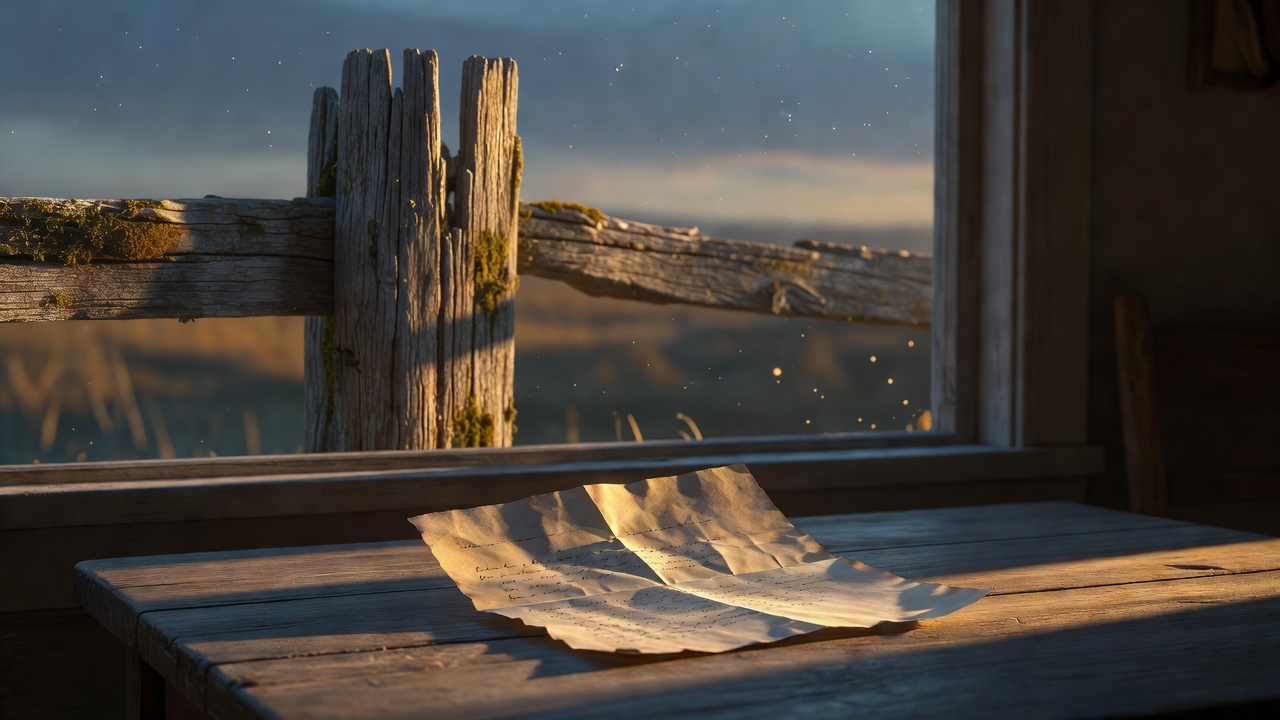
The letter arrived in an envelope I did not recognize, forwarded twice, my name written in handwriting I knew before I knew I knew it. My brother. Twenty years of quiet between us, and there it was in the mailbox beside a water bill, thin and unremarkable, folded around three pages. I am sixty years old. I have spent a good part of those years learning to read patterns: in the sky, in the body, in the small repeating signs that surface when you finally sit still long enough to notice them. So when I opened that envelope I did what I always do. I looked for meaning. I sat with it for an hour, turning his sentences over, certain the letter was a message about forgiveness, about lineage, about time. It was not. It was a letter from a man who wanted his brother back. That is all it was. It took me four days to hear it. ## What I Did Instead of Calling The letter sat on the kitchen table. I
made tea and watched the steam curl, and something in me said, there, a sign, as if the universe had bothered to confirm my own importance. I have been doing this for decades. It is a beautiful habit and it is also, I am learning, a place to hide. For three nights I wrote him a reply in my head. Long. Careful. Full of sentences that sounded like the closing pages of a book, the kind of writing that lets you feel finished without ever having to be present. I never sent it. I never even opened a drawer for a pen. Here is what I understand about the sage's particular trap. The habit of turning a raw moment into a lesson is a way of staying at a distance from it. As long as I am interpreting, I am not answering. As long as I am finding the pattern, I am not picking up the phone. Four days I preferred the meaning of the letter to the brother who wrote it. ## The Twenty Years Were Never One
Decision Estrangement is rarely a single rupture. It does not arrive with a slammed door. It is a hundred small deflections: a birthday I meant to call about and did not, a phone number carried forward through three new phones and never once dialed, a Christmas card that felt too thin to send because too much had gone unsaid. For years I told a story in which the silence was noble. I was walking a contemplative road, I said. Solitude was the work. Space was the practice. That story was flattering and it was false. It was the shadow of my own temperament dressed up as a vocation: overcommitting to meaning before rest, before the plain act, before the phone. I would rather understand a thing than do it. Understanding is quiet and it costs nothing and it never requires me to be refused. Doing can be refused. That is the whole difference, and it took most of my life to be willing to say it
out loud. Twenty years of that adds up to a stranger who happens to share your childhood. That is the arithmetic of it. Nothing mystical. Just addition. ## The Phone Call About a Broken Fence When I finally dialed, I had nothing prepared. He answered on the third ring and said, oh, it is you, and then he told me about the fence. The fence. A storm had taken the north post. His neighbor's dog kept slipping through the gap. He wanted to know whether to sink the new post in concrete or set it in gravel, and did I remember what our father used to do. I remembered. Gravel. Our father said concrete cracks in a hard freeze, and gravel drains and shifts, and anything that has to last has to be able to move. I said it out loud and heard our father's cadence come out of my mouth, and my brother laughed the way he laughed at twelve. We talked for forty minutes. Not once in those forty minutes did
the words forgiveness or apology get spoken. When we hung up I stood in the kitchen with my hand still on the phone and understood that the reconciliation had already happened, somewhere around the fifteenth minute, while I was explaining how deep to dig. ## What I Am Learning to Call Sacred I had wanted a sacred reunion. I had wanted it to mean something out loud, so that I could write it down, so that it could take its place among the eclipses and the visions and the manuscripts. The reunion declined to be an initiation. It was a Tuesday. The old manuscript on my desk insists on the opposite lesson: that everything is a sign, that the sky corresponds to the soul, that nothing is only what it appears to be. It is a good book and I am glad it found me. But the fence post is not a sign. It is a fence post. And my brother is not a symbol. He is a man with arthritic hands and a neighbor's
dog in his yard and a laugh I had forgotten I knew. Maybe this is what the water in me has been trying to teach me for sixty years. Water does not interpret the shore. It meets the shore. It arrives, it moves the stones a little, it goes. Since that call we have spoken eleven times. Mostly about nothing. Weather. His knee. A leak in his garage that turned out to be nothing. Last week he sent a photograph of the fence standing straight and true, and I did not turn it into a lesson. I put it on the refrigerator. ## Closing Reflection The letter is still on the kitchen table. I did not frame it and I did not file it away. It sits under the salt cellar where I can see the corner of it while the kettle heats, and that placement is the most honest theology I have managed in years. If you are carrying a silence like mine, I will offer you only what I actually know. The call does not require a
speech. Dial the number. Ask about the fence. Whatever needs to be said will find its way into an ordinary sentence, and the ordinary sentence will hold it better than any ceremony you could build around it. I waited twenty years for a worthy first word. The word that worked was gravel.