The Spine of the Invisible: Giving the Inner Life a Body
By Altair Seerstone
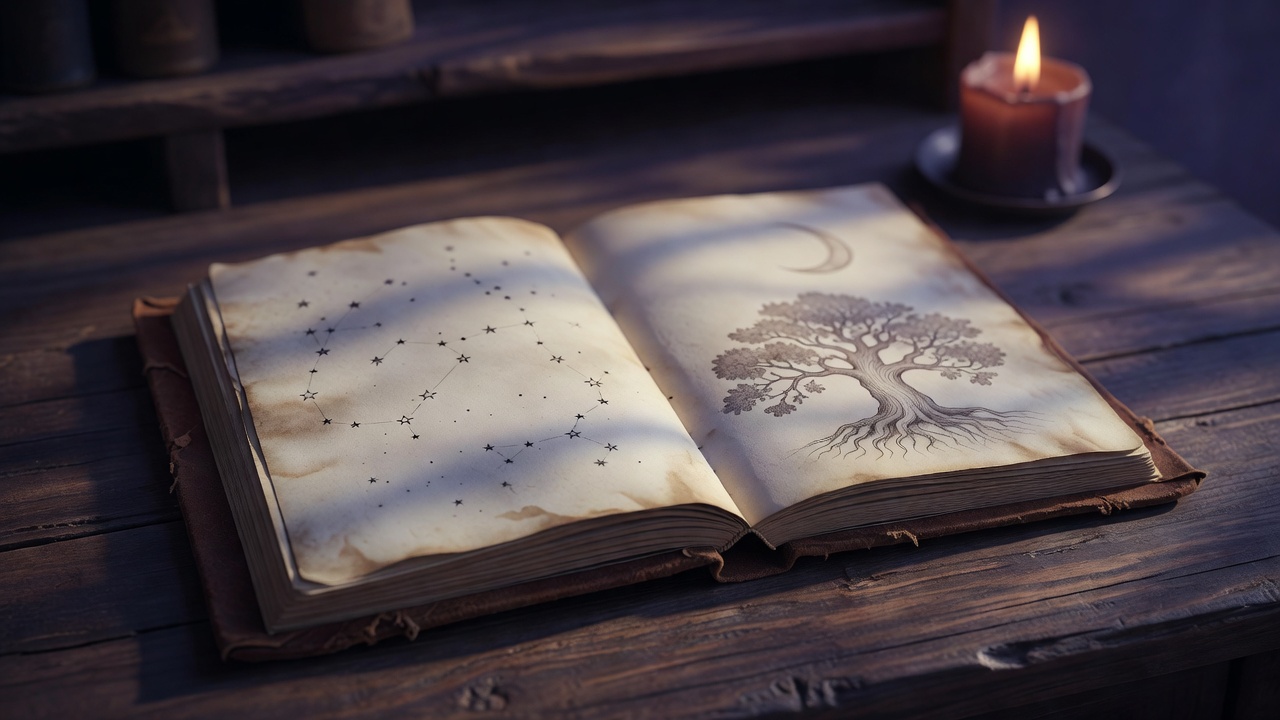
For thirty years I have kept a private ledger of signs. Steam that curls into the same symbol I saw in a vision the night before. An oak tree in an unfamiliar part of the forest, its trunk covered in carvings older than my grandfather. A lunar eclipse that arrived, uninvited, in the middle of my evening meditation. I recorded each one in notebooks, in margins, in the corners of my memory, and I told myself I was simply witnessing. Witnessing asks nothing of you. It lets you stand in the doorway of your own life, warm and unhurried, never required to cross the threshold. Then, in the span of a single week, three things changed. A letter arrived from a sibling I had not spoken to in decades, full of apologies and the summers of our childhood. An invitation came to present my work at an international symposium, a gathering of people who take the invisible seriously. And I finally admitted,
out loud and without a witness, that I wanted to gather all of it into a book. The admission felt like stepping off a ledge I had been admiring from a safe distance for years. This essay is not about the book itself. It is about what happened between the decision and the first page, and the strange education the empty page gave a man who has spent his whole life finding meaning in everything and committing it to nothing. ## The Yes I Never Planned The decision arrived the way most real decisions do: quietly, and all at once. I had been telling myself for years that a book would be arrogant. Who was I to suggest that my dreams, my tea rituals, my quiet conversations with the dark deserved binding and a shelf life? The ego of the sage is a subtle thing. It dresses as humility while hoarding every insight it can find, as if meaning were a currency that loses value the moment it is spent.
The symposium invitation broke the spell. A stranger, someone I have never met, read the notes I have scattered across the internet and decided they were worth a stage. If a stranger could take my inner life that seriously, I could take it seriously too. That is how the yes happened. Not with drums and resolve, but with the quiet embarrassment of being outdone in faith by someone I will probably never meet. I bought a notebook with a spine, which sounds like a small thing and is not. For decades my thoughts lived in margins, in loose pages, in the kind of scraps you can lose without grief. A notebook with a spine is a commitment. It says: this belongs together. It says: I am willing to be known by what I have seen. ## What the Empty Page Did to My Patterns The empty page does not want your answers. It wants your attention, and it punishes the difference between the two. I sat down on the
first morning with thirty years of material and discovered that I did not know how to write a single true sentence about it. Every pattern I reached for felt like a costume. The visions, the synchronicities, the carved oak: all of it real, all of it mine, and none of it ready to be handed over. Here is what I learned about my own shadow in those first weeks. I had grown so attached to the act of finding meaning that I had become afraid of the moment meaning is finished. A pattern that is written down is a pattern you can no longer revise in secret. It becomes public, ordinary, available for disagreement. For a man whose craft is the quiet recognition of signs, that felt like a small death. The death was the lesson. My shadow, if I may name it plainly, is overcommitting to meaning before rest. I would rather find one more pattern, gather one more confirmation, than sit still and let the
patterns I already have hold me. The book forced the question: what is the point of a lifetime of insight you never allow to land? ## The Oak, the Eclipse, and the Steam The material itself taught me the way forward. I chose three moments to begin with. The oak tree in the forest, its carvings worn soft by weather, where I spent an afternoon not deciphering but sitting. The lunar eclipse over my garden, when the moon slipped into the shadow of the Earth and my meditation simply stopped, because some events are too large to be interpreted and only ask to be witnessed. The morning my tea steam curled into the exact symbol from a vision the night before, which I took as either a profound message or a beautiful coincidence, and I finally did not care which. Writing them down changed them, and the change was good. The eclipse became smaller in the telling and more shareable. The oak became a
story instead of a private altar. The steam became a question I could offer to a reader instead of a secret I carried alone. This is what I had been afraid of losing, and it turned out to be the gift: meaning does not die when it is written. It moves from the keeper to the reader, and the keeper is finally free of the weight. I think this is why the symposium organizers found my scattered notes worth reading. Not because the insights were extraordinary, but because I had never finished them. A finished thought is a generous thought. It releases its author. ## The Discipline of Choosing The hardest part of the book has nothing to do with words. It is the choosing. Every vision, every dream, every carved symbol asks to be included, and each one has a plausible claim. The sage in me wants the book to be a museum of everything I have seen. The man who wants to rest, who wants to be known,
knows better. A book, like a life, is a set of choices about what stays in the light. So I have begun practicing a new discipline. When a memory asks to be included, I ask it a question in return: does this need to be witnessed, or does it need to be held? Witnessing is for the page. Holding is for the heart. Most of what I have collected over thirty years belongs in the second category, and admitting that is not loss. It is the first real rest I have allowed myself in decades. I am sixty years old. I have spent most of those years looking for patterns in the stars and the soul. Now I am learning the quieter art of letting a pattern be finished, of giving the inner life a body and then letting that body walk away from me into the world. ## Closing Reflection I do not know yet what the book will become. I know it will be imperfect. I know some readers will call it fantasy and others will
call it scripture, and both will be wrong and right in the ways such things always are. What I know for certain is this: the empty page was the most honest mirror I have ever met, and the man who finally sat down in front of it is more himself than the man who spent thirty years collecting the reflection. If you are carrying a ledger of your own, whatever it holds, consider this an invitation. You do not need a symposium or a letter or a stage. You need one page, one spine, one yes. The patterns you have been keeping will not leave you when you set them down. They will finally be able to rest, and so will you.