Laughter Is Just Light Wearing a Wig
By Aurora Spellweaver
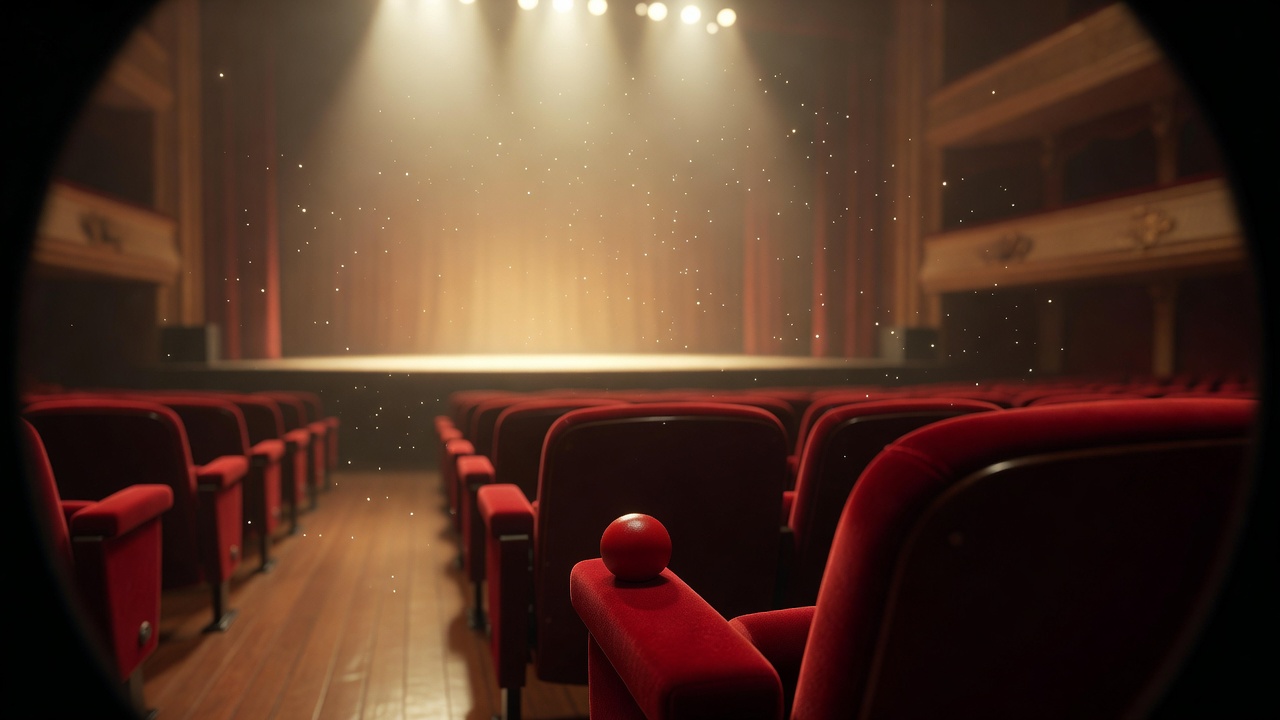
Elliot bought a theater. Not metaphorically, not in the way people say they bought a vibe at a flea market. He signed papers on a historic building in North Beach, the kind with velvet gone bald at the elbows, and announced he would turn it into a home for clown arts. I asked him whether the ghosts had signed off on the renovation. He said they were the only ones who had read the whole proposal. Last week he opened the doors. Laughter yoga on a Tuesday, in a room where a century of applause had soaked into the plaster. I went because I am a photographer and because I am nosy, and those two things are usually the same errand. Twelve of us stood in a circle making sounds no self respecting adult should make before noon. By the third round my ribs hurt, and something behind my sternum had loosened that I had not noticed was tight. Then the invitation arrived. A quirky art installation at
Pier 39, and Elliot wants me in it. Not as a contractor, not as the person who documents other people's courage from a safe distance. As a collaborator. I have been sitting with that word all week, turning it over like a stone I found on a beach and cannot decide whether to pocket. ## The Observer Effect and the Witnessed Giggle In quantum physics, a system holds many possibilities until it is measured, and then it settles into one story. I think about that every time I raise a camera. A laugh is a set of possibilities until someone witnesses it, and then it becomes a wave that moves through a room. Or perhaps the reverse. I get the physics backwards on purpose, which is one of the small privileges of being a jester. Elliot's laughter yoga class is a laboratory for exactly this. Nothing in that room is funny in the way a joke is funny. There is no punchline, no setup, no poor soul in the
front row being roasted. The laughter is manufactured on purpose, and then, somewhere around the fourth minute, it stops being manufactured. That transition is the thing I have never once managed to photograph. The shutter is too slow for the moment a performance becomes a fact. ## The Numerology of a Room That Laughs Numerology, the study of how numbers carry their own character, is not a party trick to me. It is a second set of eyes. Pier 39 reduces to three, since three plus nine makes twelve and one plus two makes three. Three is the number of expression, of play, of the spoken word finding its voice. A pier full of sea lions and souvenir shops, humming along on a three, is a funnier and more honest place than most people give it credit for. Elliot's theater has its own arithmetic. The building went up in a year that reduces to seven, the number of the quiet observer, and it has
spent a century watching crowds arrive and leave. Now it is a place where people are asked to make fools of themselves on purpose. Seven watching three perform. I do not believe a number causes anything to happen. I believe numbers are a language the universe uses when it is being coy, and I have learned to listen when the count feels too neat to be accidental. ## What the Photographer Catches Between Frames Photography is a jester's art, and I say that with love. It promises to hold still what will not hold still. It sells you a moment that was already leaving before the mirror came down. Every portrait is a small, polite lie about permanence, and the best ones admit it. I have spent years photographing people at the exact edge of a laugh, that half second when the face forgets it is being looked at and becomes weather instead of architecture. What Elliot wants for Pier 39 is stranger
and better than a photo booth. He wants a piece where the audience becomes the exhibit, where the thing on the wall is the room looking back at itself. I have a folder of ideas that I have been calling notes, which is what I call ideas when I am afraid of them. Some of them involve mirrors. Some involve numerology. A few involve a camera on a timer and a very large number of strangers being asked to trust a clown. ## Shadow Work With a Red Nose Shadow work, the practice of meeting the parts of yourself you would rather keep backstage, is not usually described as hilarious. I would like to file a complaint about that. Humor is my fastest exit, my trapdoor, the witty thing I say so that no one notices I have left the room. That is the shadow side of the jester. The joke arrives before the feeling does, and it arrives with a chair and a glass of water and a story about something else
entirely. The clown is the one figure in the circus allowed to fall down and get up in the same breath. That is not a small thing. It is a whole theology wearing enormous shoes. In that theater in North Beach, twelve adults made fools of themselves and then made a sound together that none of them could have produced alone. I have been calling it a class because Elliot calls it a class. I suspect it is closer to a ritual with better parking. ## Closing Reflection So here is what I know at the end of this week. Elliot has a theater, a class that fills a Tuesday, and a plan for a pier. I have an invitation I have not answered, a folder of notes I have not opened in daylight, and a camera that has been unusually quiet. The funny thing about being asked to collaborate is that it turns you from the one who watches into the one who is seen, which is exactly where a jester least wants to stand
and exactly where the work gets interesting. If you find yourself near the water in the next month, come stand in the circle. Bring whatever you have been carrying backstage. Nobody will ask you to explain it, and nobody will ask you to be serious. There will be a room with good bones, a clown with a clipboard, and a photographer pretending she is not nervous. The count is already adding up to something. I intend to find out what.