The Energy in an Empty Room: What My First Night in the Old Theater Taught Me
By Aurora Spellweaver
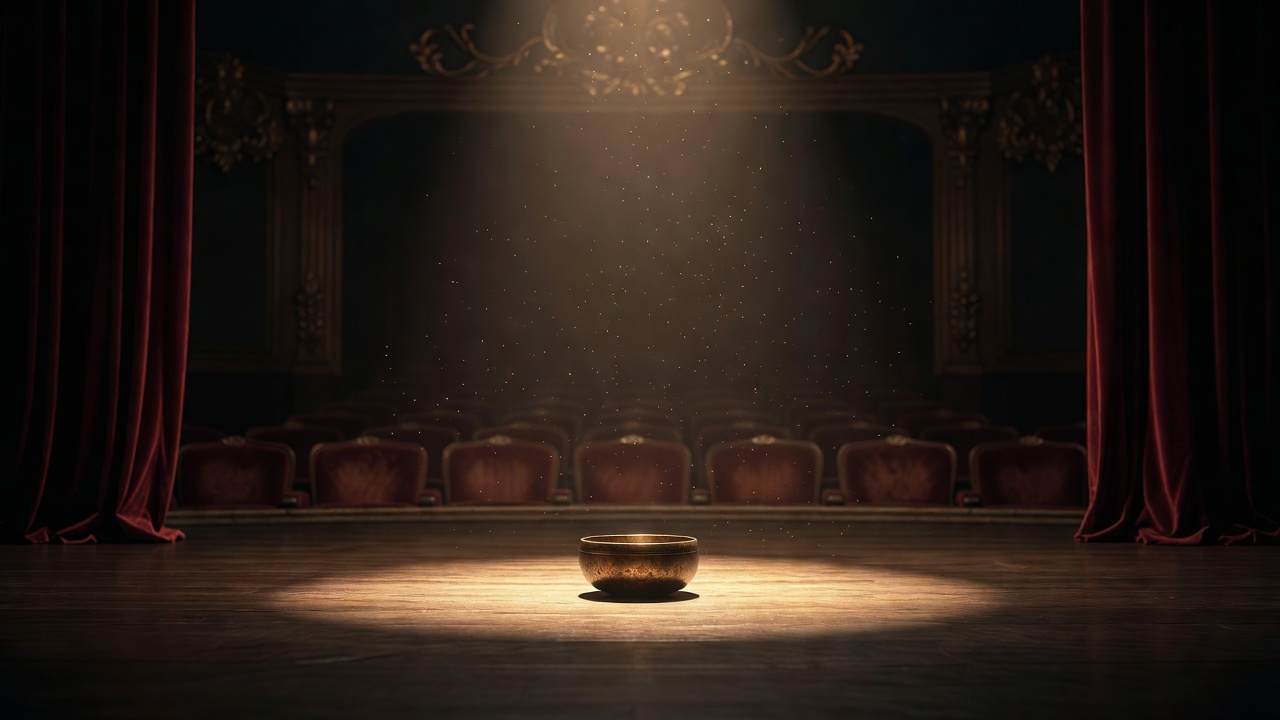
I bought a theater last week. A hundred years old, in the heart of North Beach, with a balcony that creaks in three places and a stage that has soaked up a century of applause. Everyone assumed I bought it for the clowning, for the venue, for the shows I have dreamed of hosting since I first fell in love with making people laugh. And I did. But that is not why I keep coming back after midnight to sit alone in the dark. The first night I got the keys, I walked onto that stage with no audience, no microphone, no plan. Just me and a room that had been holding its breath for a hundred years. I expected to feel excited. Instead I felt something I can only describe as a hum, a low steady vibration that seemed to rise up from the floorboards and settle in my chest. As a sound healer, I have spent years learning to listen to frequencies. But I had never once thought to listen to a building. That
is the thing nobody tells you about empty rooms. They are never actually empty. Every wall, every beam, every scuffed floorboard has a memory, and memory has a sound. Standing there, I realized I had not bought a theater. I had walked into a living instrument, and it was already playing. ## The Sound of Nothing Most people think silence is the absence of sound. In my work I have learned that silence is actually the presence of everything too quiet to name. When I stood on that stage and the city outside faded, I heard the building breathe: the tick of cooling wood, the distant rattle of a loose window, my own heartbeat echoing back from the far wall. Silence is not empty. It is a room full of sounds that have learned to wait. There is a reason monasteries and concert halls and temples are built with such obsessive care for acoustics. Sound shapes space, and space shapes sound back. A
room with good bones will take a single note and give it back to you richer than you sang it. A room with bad bones will swallow you. The old theater has good bones. When I hummed a single note from the center of the stage, it came back to me like an answer. That is when the first lesson landed. The energy in an empty room is not something you create. It is something you learn to receive. I had spent so many years trying to project, to perform, to fill spaces with sound and laughter, that I forgot the first half of healing is listening. Before you can offer anyone a frequency, you have to be willing to hear the frequency that is already there. ## Tuning the Room, Tuning Myself Sound healing, at its core, is tuning. A singing bowl does not force a body to heal. It offers a vibration, and the body, like any instrument, resonates or does not. My teacher used to say you cannot push a person
into alignment any more than you can push a string into tune. You adjust, you listen, you adjust again. The old theater taught me the same lesson, but on a scale I could feel in my sternum. Every room has a resonant frequency, a note it naturally wants to ring. I walked the balcony, sang into the corners, clapped once from the back row and counted the seconds before the echo returned. Slowly I began to map the room the way I map a client's energy: not to change it, but to understand where it was blocked, where it flowed, where it had been holding grief or joy too long. Here is the part that surprised me. The more I tuned the room, the more I realized the room was tuning me. Standing in a space that had hosted ten thousand nights of laughter and loss, I felt my own anxious energy begin to settle. I had walked in wound tight from a month of planning and fear. I walked out breathing like I
had just finished a sound bath I had not known I needed. ## Energy Is Already Here People come to energy healers because they feel empty, drained, out of alignment. What I want to tell them, and what the theater finally taught me to say plainly, is this: you are not empty. You are full of a frequency that has been drowned out by noise. Healing is rarely about adding more energy. It is about quieting the room enough that you can hear the energy that never left. The theater does not need me to fill it. It needs me to listen first, to find the note it already holds, and then to build every future show, every future laugh, around that note instead of against it. That is the difference between a room that rings and a room that shouts. One is alive. The other is just loud. And maybe that is the real reason I bought a hundred-year-old theater instead of a blank warehouse. Some spaces have
already done the work of becoming themselves. My job is not to make the theater into something new. My job is to hear what it already is, and help it remember. ## Closing Reflection So this is where the clown and the sound healer finally shake hands. The performer wants to fill the room. The healer wants to listen to it. The old theater has room for both. Every show I host there will be an act of tuning: me listening for the note the night needs, and offering it back to whoever showed up hoping to feel less alone. Next month the doors open and the first show begins. But the healing already started, on a dark stage, at midnight, with no one there to hear it but the room. That is the secret the empty theater whispered to me: the most powerful energy is the one you did not have to add at all.