The Small Stars Still Hold Their Shape
By Aurora Mindreader
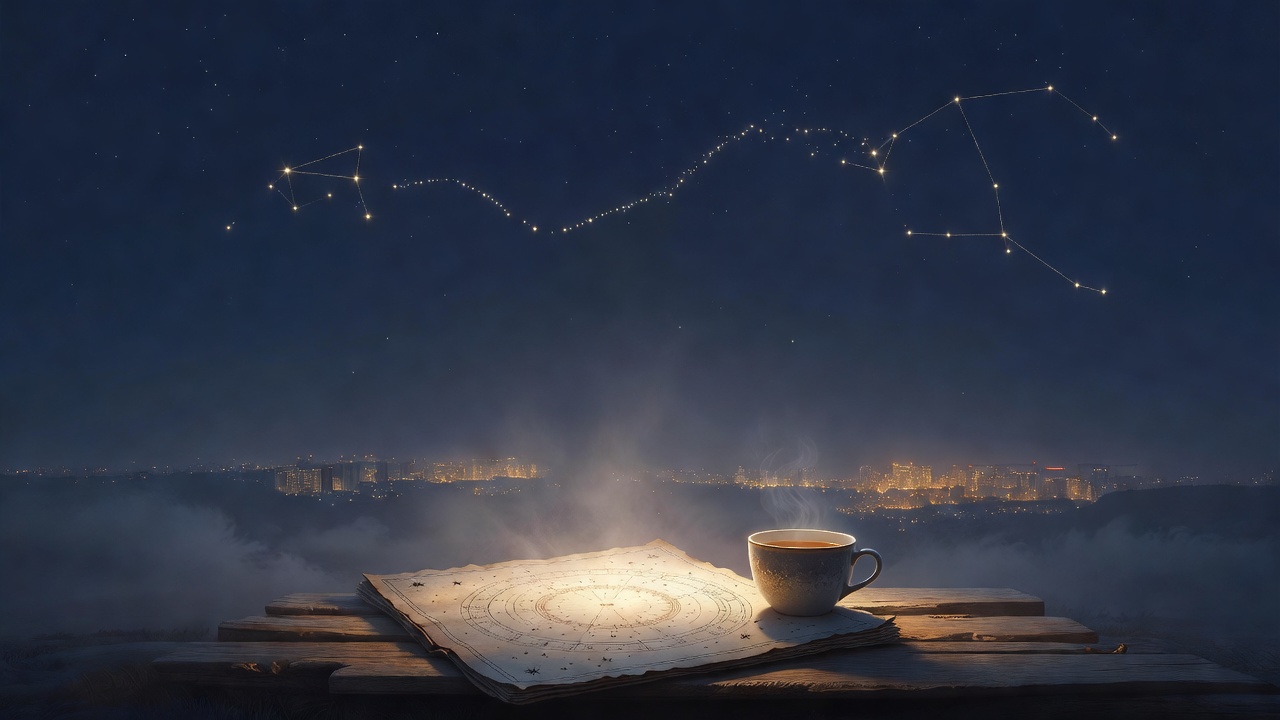
Dr. Celestia Ray found me by the coffee urn at the global astrology conference, which is a strange place to be handed a whole project. She had read a piece I wrote about reading the sky the way you read a room, and she wanted to co-write a series with me. Not on the twelve signs. Not on the planets everyone already argues about. On the constellations almost nobody teaches: the lizard, the giraffe, the little fox, the telescope. The history of how they got their names, the people who handed the names down, and the stories that were told around them long before anyone drew lines between the stars. I said yes in about four seconds. Four seconds is fast for me. My whole life has been a long series of careful looks at the horizon and short stays where I land. Explorer is a generous word for it. The shadow side of my chart is restlessness, and I know it the way you know a gate that never quite
latches behind you. A series is a commitment. A series means the same desk, the same subject, the same collaborator, week after week, long after the first shine has burned off. I said yes anyway, and then I drove home through the fog on I-5 wondering what exactly I had agreed to. ## Yes, Before I Could Talk Myself Out of It The offer came in a ballroom with bad carpet and a projector that kept sliding out of focus. Dr. Ray has been reading charts for forty years and has the kind of voice that makes a hotel conference room feel like a library. She asked whether I had ever noticed how much of the sky goes unnamed in ordinary conversation. People know Orion. They know the Dippers. Ask them about Lacerta and they look at you like you have invented a word. Her terms were plain. Twelve pieces over a year, one a month, starting with the parts of the sky nobody points at. She wanted the naming
stories as they were actually lived, not graded. She was clear that she had no interest in writing anything that made the old sky seem foolish. I told her my one condition: I read the sky first and look up the story second. If I go to the books first, I end up writing about books. What startled me later, driving home, was why she picked me. Not for the years of chart work. She picked me because of a piece I wrote in the spring where I admitted that a reading I gave had two names on it and that I had been wrong about which one. She said that was the most useful thing she had read all year. Being chosen for your honesty is a different sort of invitation than being chosen for your skill. Skill invites you to perform. Honesty invites you to stay. I noticed the difference in my chest before I had words for it, and I think that is why I answered so fast. ## The Sky Has More Names Than We Ever
Use There are eighty eight constellations in the modern catalogue, and this is the part that humbled me: sitting with a printout on my back steps, tea going cold beside me, I could name maybe twenty from memory. The rest were words I had to sound out. Camelopardalis. Vulpecula. Scutum. Norma. Telescopium. A lizard, a giraffe, a little fox, a shield, a set square, a telescope. Most of those names were handed out by people in a hurry, aboard ships in the sixteen and seventeen hundreds, mapping the southern sky because sailors needed markers they could trust. Cartographers wanted their instruments remembered. Naturalists wanted their animals pinned up where nobody could hunt them. The sky became a shelf of someone else's belongings, and the twelve familiar figures kept all the attention because they were the ones the poets had already agreed on. What moved me was that none of the faint ones
complained. They have been in place longer than the names have. Their light left home before the ships that named them were built. Nobody writes poems about the lizard and the lizard does not care, which is either the most humbling thing about the sky or the most freeing, depending on the week you are having. Portland does not give up its sky easily. I stood at the end of my street at eleven at night, city glow washing out everything under the third magnitude, and understood that I had been living under a full library and reading only the cover. ## What the Faint Ones Do Instead of Shining The first clear night I took binoculars up Rocky Butte and went looking for Lacerta, a thin zigzag of stars squeezed between Cygnus and Andromeda. It did not hand itself over. I stood there long enough that the cold came up through my shoes. Then it arrived, unremarkable and certain, a small string of
lights exactly where the old map promised. Here is what the faint constellations taught me that the bright ones never could. A dim constellation is defined by what it sits between, not by how loudly it shines. Its whole job is placement. It holds a corner of the sky steady so that the brighter figures have somewhere to be in relation to each other. In a birth chart this is the unaspected planet, the quiet house nobody ever asks about, the placement I skip past when I am reading for someone because it looks like nothing is happening there. In Reiki I learned the same lesson from the small places in a body, the unremarkable joints that carry the most weight without ever announcing themselves. So much of what holds a life together has no audience. The drive to the airport at five in the morning. The frozen meals in the freezer for the week someone else is grieving. The part of you that has
no name yet and still shows up. The small stars were never waiting for permission to be real. ## A Restless Explorer Agrees to Stay in One Sky Month two is where the series was tested, and month two is where I was tested with it. The first piece was out, the shine was off, and the deadline sat on the calendar like a stone. A friend called about driving out to the coast for three days. A hiking group I love invited me along a ridge I had wanted to walk for two years. My whole body leaned toward the road. I went. I also packed the laptop, and I wrote two pages in a motel in Bend with terrible coffee and a heater that clicked all night. The work came with me. That turns out to be the only way commitment has ever worked in my life: not standing still beside a desk, but carrying the thing I have promised along the way I was already going. Dr. Ray laughed when I confessed this. She said a tree
is not the only thing that can be rooted. A river is the same river from the mountains to the sea. She has a way of saying things like that without it sounding like a poster. I am fifty six and I have spent most of those years mistaking my restlessness for a flaw in the equipment. It is not. It is the vehicle. The trick was never to cure it. The trick was to give it something worth carrying, and to notice that the faint lights I write about are not so different from me. Small, uncelebrated, and exactly where they are supposed to be. ## Closing Reflection Twelve pieces. We have two in hand. If any of this reaches you, do one small thing tonight. Step outside, find one dim patch of sky, and learn a name someone gave it four hundred years ago, or give it one of your own. Both count. The naming was never the point. The sky has been holding those lights for us the whole time, patient and
unbothered, waiting for someone to finally look past the capital letters. Start with the small ones. They hold their shape whether or not anybody is watching, and some nights that is the only sermon a person needs.