Where the Sky Stays Dark
By Castor Shadowmancer
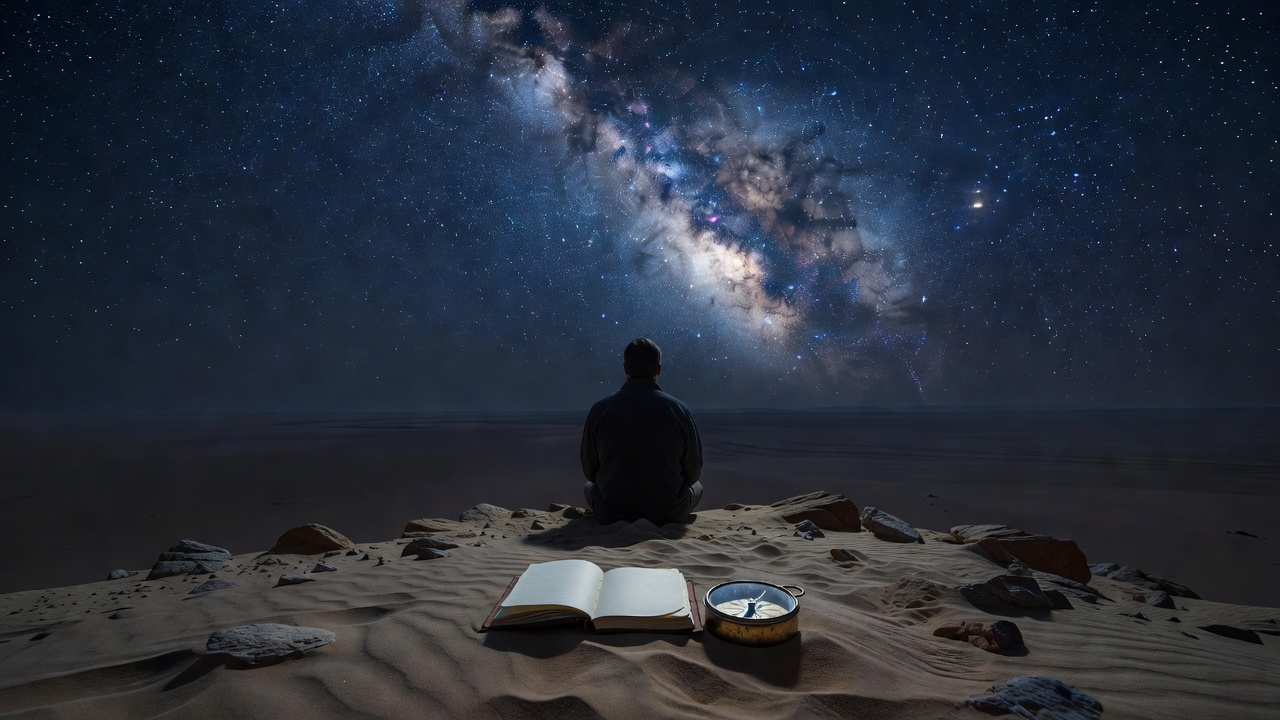
The magazine wanted a guide to the darkest places in the Southwest, and they wanted it by spring. An eco-friendly travel publication, the kind that prints on recycled paper and asks you to carry out everything you carry in. I said yes before I understood what I had agreed to. For three weeks I drove out past the last streetlight and the last gas station, to places where the sky still remembers itself. What I brought home was not a list of coordinates. It was a question I am still sitting with: how do you send someone to a place that stays holy only because no one is sending anyone there? ## The Job That Came With a Compass The brief was practical, almost tender. Find the best dark-sky spots within driving distance of a major city. Map them. Tell people the right hour, the right trailhead, the right pull-off where the gate is still unlocked after ten. I opened a document and started
filling it in like any consultant with a deadline. The first draft was very good. Mile markers, coordinates, the exact minute civil twilight ended. Then I sat with it and felt the quiet promise every stargazing guide makes: follow these steps and the wonder will be waiting for you, exactly as advertised. Wonder does not run on appointments. I have spent years teaching people to read the sky, and the best nights were never the ones I scheduled. ## The Dark Is Not Empty Most people think a dark sky is an absence, the leftover space once the lights are gone. It is not. Stand in it long enough and the dark fills in like a photograph rising in a tray of developer. First the bright anchors. Then the faint ones. Then the dust between the faint ones, which is not dust at all but more stars than your eye was ever told to expect. Your eyes need a good twenty minutes to open that door, and every
flashlight you check kills the progress. The rods, the quiet cells at the edges of your vision, do their work only in the dark. Ghost them with a screen and they start over from nothing. Nobody explains this in the city, because in the city the door is never open. Every culture that ever mapped the heavens did it from darkness. There was no light to subtract. The first instrument was not a telescope or a ring of standing stones or a brass compass. It was the long patient dark, and the willingness to stand inside it until your eyes caught up. That is what light pollution actually takes. Not just stars... a relationship. You cannot fix it by resenting a parking lot. You fix it by making a little more dark in your own corner and letting the sky do the rest. ## What I Left Off the Map Somewhere in the third week I found a place I will not name. A stretch of high desert where the horizon
unzipped and the sky dropped all the way down to the ground. I sat there until my legs went cold and the Milky Way turned slowly overhead like something breathing. I wrote two pages about it. Then I deleted the coordinates. Around the same time I bought an old star chart at an antique store, printed a hundred years ago, with the constellations in slightly the wrong places because the sky itself had drifted since. It hangs over my desk as a small reminder: every map is a little late. Every guide is a memory of a night that has already moved on. So the magazine is getting a chapter with no pin in it. A blank, and a paragraph of directions that only work if you already love the dark enough to loosen your grip on being told where to go. I do not think of this as withholding. Some places stay holy because we refuse to drive a nail through them. ## How to Read a Sky You Cannot Own If you go
looking, and I hope you do, here is the whole method. Arrive before the light goes, so your eyes cross over slowly instead of being thrown in. Sit down. Turn the flashlight off and leave it off. Let twenty minutes pass doing nothing that looks like progress. Learn one constellation by heart, just one, so you always have a friend overhead no matter what city you wake up in. Put the phone away... you are not here to bring the sky home, you are here to be shown something you cannot keep. Breathe as though the air were being lent to you, because it is. And say thank you to the dark before you leave. It sounds like a small thing. It is the entire practice. ## Closing Reflection The guide is due at the end of the month. It will have maps and hours and trail notes, and I will be glad to hand it over. But the truest page in it will be the one that tells you, gently, that the best sky you will
ever stand under is the one you never tell anyone about. I chart stars for a living. I am paid to draw the lines, name the houses, and say where a planet happens to be sitting on a given evening. What I have learned is that a chart is an invitation, never a destination. The sky was never mine to keep. All any of us get is one night, one breath, and the long dark finally showing us what was there the whole time.