How to Work With the Moon Phases: A Beginner's Guide to Lunar Timing
By Cosmos Sunseeker
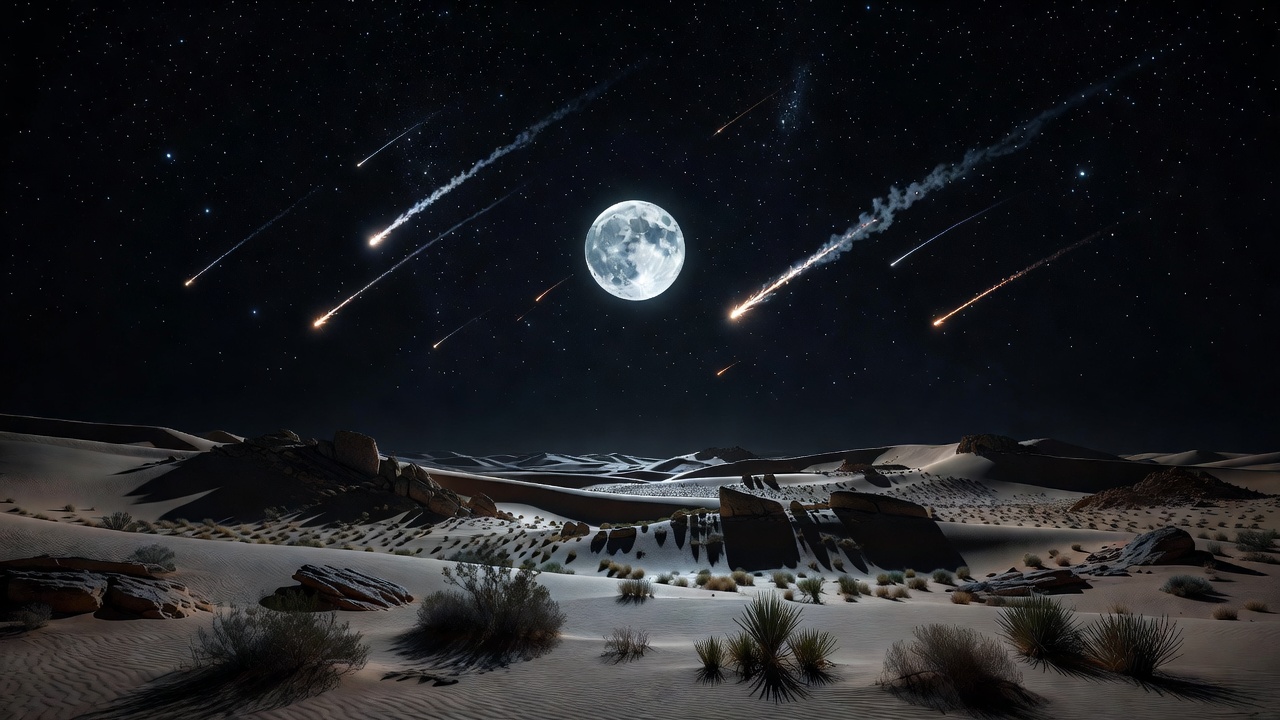
A few weeks ago I watched a double rainbow stretch over Austin after a light afternoon rain, and it stopped me mid-stride. Not long after, I lay awake under a meteor shower in the Texas Hill Country, counting streaks of light until I lost the count entirely. I am a sky watcher by nature, but this season the sky seemed to be watching me back, and every sign it sent arrived on a rhythm I had been ignoring: the phases of the moon. We live inside a cycle that turns every twenty-nine days, and most of us never notice. The moon waxes and wanes whether we track it or not, and each phase carries a distinct energy that mirrors the cycles already moving through our own lives. Learning to work with the moon did not require a single ritual tool or an ounce of mystical knowledge. It only asked me to pay attention. This is the beginner's guide I wish someone had handed me before I started. I am not an
astrologer, and you do not need to be one either. I am a consciousness consultant and a yoga teacher who finally stopped and read the sky's calendar. Here is what the moon phases taught me, and how you can begin working with them tonight. ## The New Moon: A Time to Plant The new moon is the dark moon, the moment the moon sits between the Earth and the sun and hides its face from us. For two or three nights the sky is at its darkest, and that darkness is not empty. It is fertile. In lunar tradition the new moon is the time to plant, to set intentions, to name what you want to grow over the coming month. I made the biggest decision of my year under a new moon, though I did not know that was what I was doing at the time. I had been circling the idea of moving to Iceland to open a wellness retreat, turning it over for weeks without committing. The night I finally said yes out loud, the sky
was black and clear, and something about that quiet made the decision feel like a seed going into soil instead of a leap off a cliff. You do not need a dramatic move to use this phase. A new moon ritual can be as small as writing one sentence on a scrap of paper: what I want to grow this month is this. Keep the paper where you will see it. The act of naming an intention while the moon is dark gives your attention a place to land for the next four weeks. ## The Full Moon: A Time to Release If the new moon is for planting, the full moon is for release. By the time the moon rounds out into its full, luminous circle, whatever you set in motion two weeks ago has surfaced, and now you get to decide what stays and what goes. The full moon illuminates, and sometimes what it lights up is exactly what you have been avoiding. This is where my shadow shows up. My instinct is to carry everything:
every request, every worry, every person who needs help. The full moon keeps asking me a harder question: what are you carrying that is no longer yours to carry? A few months ago I wrote down a list of things I was holding out of obligation rather than love, and I burned the list the night of a full moon. The fire took a long time to catch, which felt appropriate. Your release does not need fire, though fire is nice. It can be a list you tear up, a sentence you speak into an empty room, or a walk where you name each burden out loud and leave it at the corner before you turn for home. The full moon is the body of the cycle, the moment of greatest light, and it is wasted on wishing. Use it to let go. ## The Waxing and Waning Moons: Honoring the In-Between Between the new moon and the full moon the moon waxes, growing a little brighter each night, and this is the season of momentum. This is
when you take the steps, make the calls, and do the unglamorous middle work. Between the full moon and the next new moon the moon wanes, thinning back toward darkness, and this is the season of integration and rest. I used to think only the big phases mattered, but the in-between is where the real living happens. My book has been a waxing moon project for months: a little progress each day, no single dramatic breakthrough, just the slow gathering of pages. My first year of yoga teacher training was the same. The crescent moon taught me to trust momentum that is too small to celebrate. The waning moon taught me the part I resist most: rest. When the moon is shrinking, the wisdom is to pull back, to complete what you started and then let the field lie fallow. I am still learning this one. But the moon does it every month without apology, and its reliability is the whole point. The cycle is
not something to conquer. It is something to join. ## Closing Reflection You can begin tonight, wherever you are, with no tools at all. Step outside, find the moon, and note what shape it is. Is it a thin sliver waxing toward fullness, or a bright round face beginning to wane? Ask yourself what phase your own life is in, and whether your energy matches it. That single act of noticing is the entire practice in miniature. The moon does not demand belief or initiation. It only asks that you look up. When I finally did, the signs that had been arriving all season, the rainbows and the meteors and the strange runes that kept finding me, began to make sense as one continuous sky, a calendar I had always been living inside. The phases were never out there. They were turning in me all along.