The House That Had to Be Small: What Building With a Master Taught My Rescue Reflex
By Cosmos Sunseeker
The email that changed my year arrived on a Tuesday. My company had been chosen to lead a pilot project in sustainable housing, and they wanted me to run it. My first response, before I had even finished reading the brief, was a familiar one: yes. Yes to the scale, yes to the stakes, yes to the chance to build something that could help more people than I would ever meet. That is how I have always answered the world, with a reflex that says the more I take on, the more good I can do. A week later I was on a video call with the architect who had agreed to join the project, a quiet Icelandic master whose name I still mispronounce on the third try. I had prepared a deck full of big numbers and bold timelines. He waited until I finished, then asked a single question that stopped me cold. Who will live there? I did not have a good answer. I had planned a project, not a home. This is the story
of what that question cost me, and of what building small taught me about the size that care is meant to come in. ## The Reflex That Made Me Say Yes I have spent my adult life being the person who takes the impossible meeting, the extra shift, the cause no one else has energy for. Colleagues call it passion. My friends call it tireless. The truer name is that I am afraid of what happens when I stop moving and the room goes quiet. If I am helping, I do not have to sit with myself. That has been my engine for years, and it runs on a fuel I never wanted to inspect: the quiet belief that I am only valuable when I am saving something. The housing pilot fit the pattern perfectly. Sustainable homes, green energy, a whole region watching. It was the biggest rescue mission I had ever signed up for, and I felt the familiar rush the moment the contract landed. I began collecting commitments the way
some people collect stamps: a material here, a partner there, another city asking to copy our model before we had built a single wall. The burnout always came later, and I always mistook it for weakness. After the long hikes and the night classes in things I barely needed, I would crash, then apologize for crashing, then sign up for the next thing to prove I was fine. The pattern was so old I had stopped seeing it. It took a man who builds one wall at a time to hold up a mirror. On that first call, the mirror appeared in the form of a question I could not answer. Who will live there? I had market studies. I had energy models. I had a timeline that impressed my boss. I did not have a single family in my mind: no faces, no routines, no idea what a Tuesday morning would look like inside the homes I was so eager to build. ## The Master Who Refused the Bigger Plan The architect did not refuse
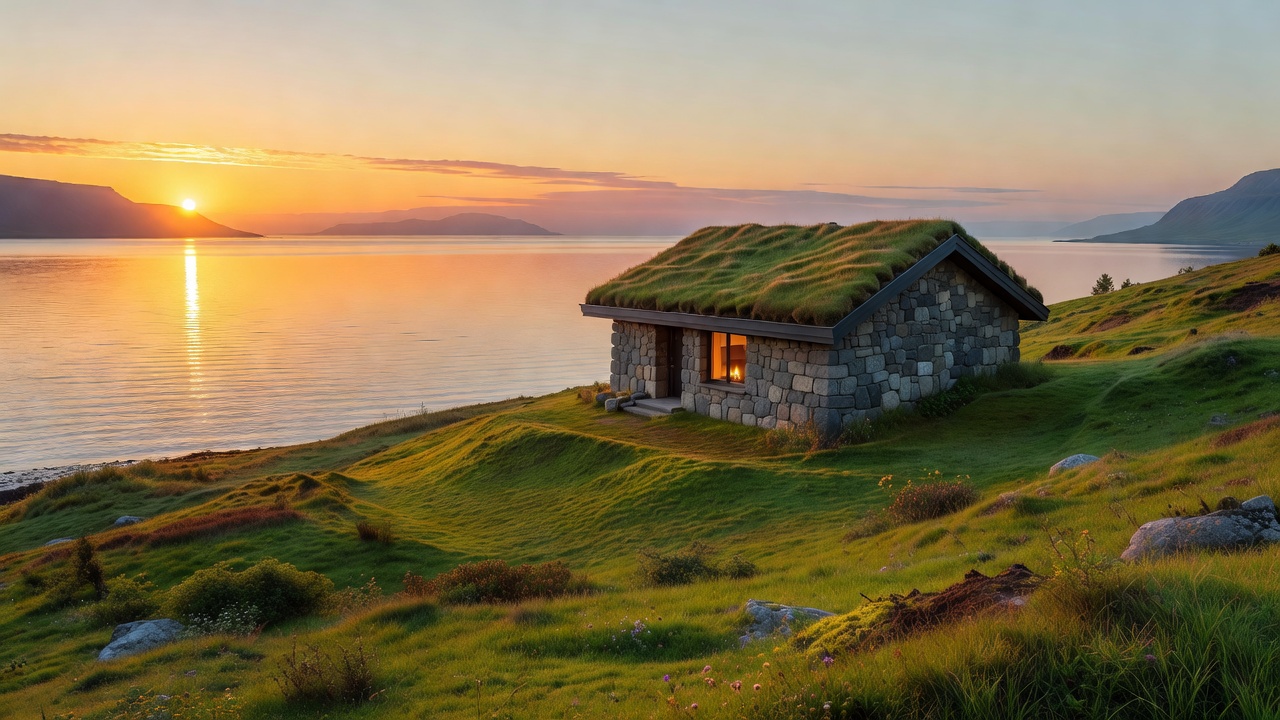
the project. He refused the version of it I brought. When I showed him renderings of sleek towers that could stack hundreds of units, he nodded politely and asked to see the site. So we flew to Iceland, and I learned that a site is not a location. It is a conversation. We stood on a slope above a fjord where the grass roofs of old farmhouses still hug the earth like blankets. He pointed at stone that had been pulled from that same ground centuries ago and stacked without mortar, still holding. He talked about timber the way other people talk about old friends. Nothing in his world is abstract. Every material has a memory, and he treats each one with the patience of someone who expects to be remembered by the buildings he leaves behind. The plan we eventually drew together was smaller than anything in my deck. One house first. Local stone, timber from managed northern forests, a turf roof
that keeps the cold out the way the old farms did, and geothermal heat from the ground beneath us. It would use a fraction of the energy of a conventional home and almost none of the drama. My bosses asked if we could scale it. The master said that is the wrong question. The right question is whether the first one can be loved. Watching him work rearranged something in me. He measures twice and cuts once not because he is slow, but because he intends for the cut to be the last one. Every joint is a promise. I had been treating buildings as announcements, ways to say look what we did. He treats them as shelter, ways to say you are safe here. The difference sounds small. It is the difference between shouting and breathing. ## The Size Care Is Meant to Come In Somewhere between the foundation and the roof, the pilot stopped being my rescue mission and became my teacher. The house gives back
without me. That was the sentence that undid me, spoken by the master one evening while we shared coffee and watched the low sun paint the fjord. Once the walls are up and the systems are in, the building works. It warms people, shelters them, costs them almost nothing to run. It does not need my adrenaline. It needs only to be built honestly, once. I had always assumed that the amount of good I could do was equal to the amount of effort I burned. The house runs on geothermal heat and careful angles, not on anyone's heroic output. Care, I am learning, is not a quantity of sacrifice. It is a quality of attention. A well-made small thing serves quietly for decades. A grand thing built in a hurry serves the builder's ego for a season and then asks for constant repairs. So I stopped apologizing for the pilot being small. One house. Then, if the first one is loved, a few more along the same
slope, in the same materials, at the same pace. Build for the place, and the place will tell you how much it can hold. Local stone does not need to be impressive. It needs to be from here. The change did not announce itself. It arrived the day I noticed I had stopped collecting commitments. I turned down a speaking invitation so I could spend the week on site. I let a second city wait until the first home was finished. For the first time in years, doing less felt like progress instead of failure. The reflex had not disappeared. It had simply found its right size. ## Closing Reflection The house is still a house and not yet a neighborhood. But I have already received the thing I was actually building for, which is a different relationship with my own energy. I still want to help. I still believe that we are here to mend what we can. I have simply stopped believing that my exhaustion is
the proof of my goodness. The wall I help raise this week will stand whether or not I am watching, and that is not a sad thought. It is the most freeing thought I have had in years. When the first family moves in, I want to be there to watch the house do what it was made to do: hold warmth, hold weather, hold a life, without asking anyone to burn for it. That will be the real opening, the one no ribbon can mark. I used to think I was building homes to save the world. I was actually learning, one small roof at a time, how to let the world save me from the need to save it.