The Stone the Road Went Around
By Cosmos Sunseeker
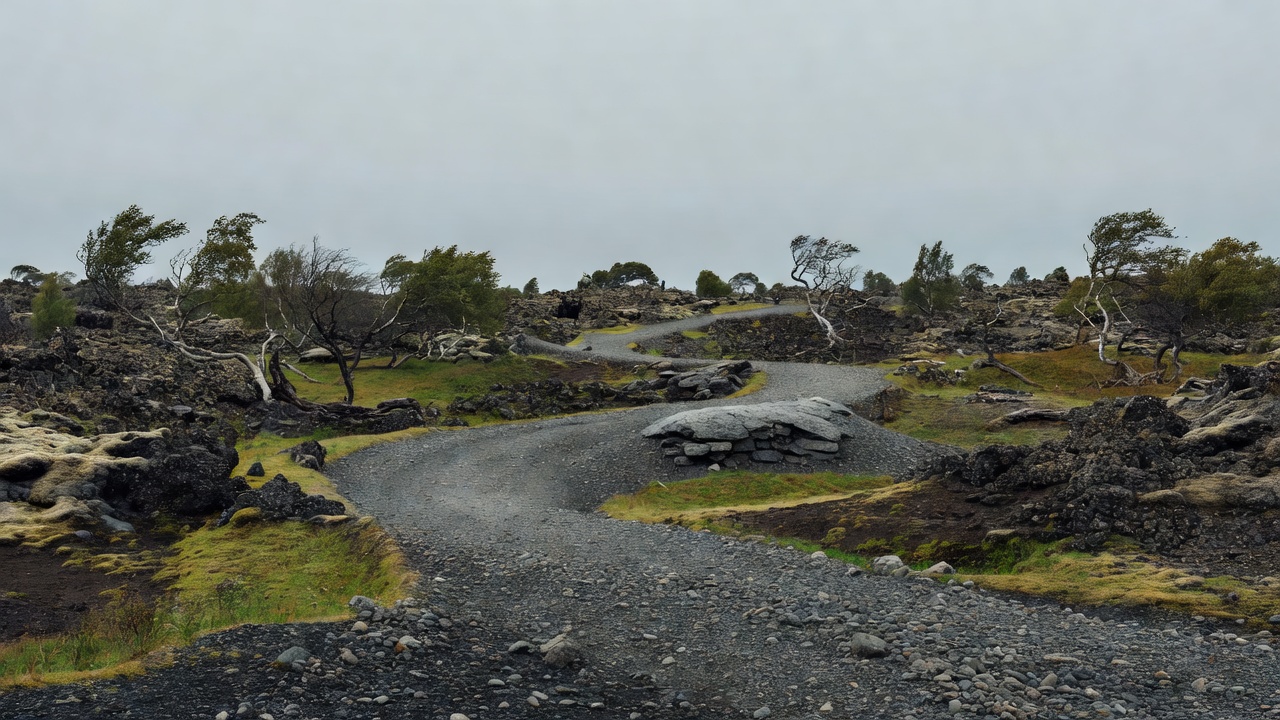
The excavator was already running when Halldor lifted one hand, the way a man does when he has made the same gesture a hundred times and no longer needs the words that go with it. We were standing on the south shoulder of the land, twelve hectares of broken lava and moss that will one day hold the sanctuary, and I had spent the morning finding things that bothered me. The worst of them was a low grey rise of rock sitting exactly where I wanted the path to run. Clear it, I had told the crew. Halldor watched the bucket swing toward the rock, and then he said, in the flat voice Icelanders use for things that are not up for debate, not that one. I am a consciousness consultant, which is a tidy way of saying I help people come back into their bodies after years of leaving them. I teach yoga. I write about lucid dreams, moon timing, and the long discipline of not burning yourself down while
you are busy saving everyone else. For most of my life I have believed that the first move, in any hard situation, is to clear the ground. Make space. Remove whatever is in the way. It has served me. It has also nearly ended me. So when a man who has been building in that country for forty years told me to walk around a rock, something in me went quiet and listened. This is the story of a stone I did not move. ## The Day the Architect Stopped the Excavator Halldor has spent his career raising buildings in wind that will strip the paint off a car and dark that lasts most of the winter. He does not romanticize the land. He measures it, prices it, argues with it. That is why the gesture surprised me. He walked up to the rise, put his palm flat on the cold stone, and stood there for a moment the way you stand at a door when you are deciding whether to knock. This is not a rock, he said when
he came back. It is a place. He explained that in his country, when a road is surveyed and a single boulder sits in its path, the road is often asked to bend. Not every time, and not as a rule you can point to on a permit, but often enough that people who lay asphalt have learned to leave a small margin around the ones that feel different. You do not fight the map. You redraw it by a few meters and carry on. I asked him what makes one stone different from another. He shrugged and said, the ones people already stop at. That answer has followed me around for weeks. The line between a rock and a place is not geology. It is attention. ## What the Icelanders Walk Around The habit behind his shrug is older than the roads. Icelanders have long spoken of the huldufolk, the hidden people, and of the landvaettir, the spirits that keep a piece of country. The two ideas braid together into a single
posture, one that says the land is not empty and it is not yours. There are spots people will not disturb. Sometimes they are called alagablettir, the stones and slopes left alone for so long that disturbing them has become unthinkable. Outsiders like to file this under superstition and move on. That reading misses what is actually happening. Whether or not you believe a rise is inhabited, the practice of going around it changes the person doing the walking. You learn to look before you level. You learn that your plan is a guest in a place that had a plan of its own long before you arrived. I am not here to tell you what lives under the moss. I am telling you that a whole country has arranged some of its roads around the possibility, and the arrangement works. The roads still reach the towns. Nobody has been ruined by a few extra meters of asphalt. The cost of humility turns out to be
small, and the thing it protects cannot be rebuilt once it is gone. ## The Hero's Reflex to Clear the Ground I have a hero's wiring. My own chart calls it out plainly: the archetype that lifts things, and the shadow that lifts until it breaks. For years my first instinct in any room was to find the problem and fix it before anyone had to ask. I called that service. Some of it was. Some of it was me deciding that I already knew what a place needed, and moving in with the excavator before the ground had a chance to speak. You can do this to a person as easily as to a hillside. I have cleared ground in friendships that only needed me to stand still. I have turned other people's slow seasons into projects. The wreckage is quiet, because from the outside it looks like help. My rescue dog Skye taught me the first version of this lesson. She had been moved around enough that every loud gesture
read as threat, so the way through was not bigger kindness. It was smaller movement, patience, and letting her come to me on her own clock. She is asleep at my feet as I write this. The stone and the dog have been saying the same thing for years, and I have been slow to hear it. ## Building as a Guest So the sanctuary has changed shape. The path now curves west to avoid the rise, which means it takes eleven extra steps to reach the water, which means every guest will walk around that stone and perhaps wonder why. The foundation steps down the slope in three levels instead of cutting one flat shelf. The windows that will frame the aurora were placed around a stand of old birch that Halldor would not touch. The geothermal plan I am developing with Nattura Essence only works because we stopped fighting the ground and started reading it. Heat rises where it rises. You do not command it, you
meet it where it lives. The same is true of the retreats we are designing: the schedule bends around the weather and the light, not the other way around. None of this made the project smaller. If anything it made it truer. A building that argues with its land looks like an argument. A building that listens looks like it belongs, and belonging is the entire point of a sanctuary. ## What the Stone Taught Me About Rest My tagline says I am still learning to rest, and I have been embarrassed by that honesty for as long as I have worn it. The stone reframed the whole subject. Rest is not the reward you earn after the ground is finally clear. Rest is the decision not to clear ground that was never yours to clear. I grew up thinking minimalism meant removing things until a space felt calm. Iceland keeps teaching me the other reading. It means leaving room for what is already there and speaking.
The rock stays. The birch stays. The moss keeps its hundred quiet years. My job is to notice, and then to design around the noticing. There is a practical gift in this too, one that matters for a man who has burned out more than once. Going around something costs almost nothing. Fighting it costs the years. I spent a long time paying the second price for problems that only ever wanted to be greeted. ## Closing Reflection The rise is still there. I walk past it most mornings before the crew arrives, and I have started leaving my hand on it the way Halldor did, which is probably a strange thing for a man to admit in public. The path curves. The dog trots ahead. Somewhere to the north, the aurora is doing whatever it does when no one is watching. If you take one thing from a stranger's rock, let it be the question I now ask myself before I reach for the shovel. Is this an obstacle, or is it
a neighbor. The answer changes what you build, and it changes who you are by the time it is finished.