Building a Place That Will Outlast My Restlessness
By Orion Stormcaller
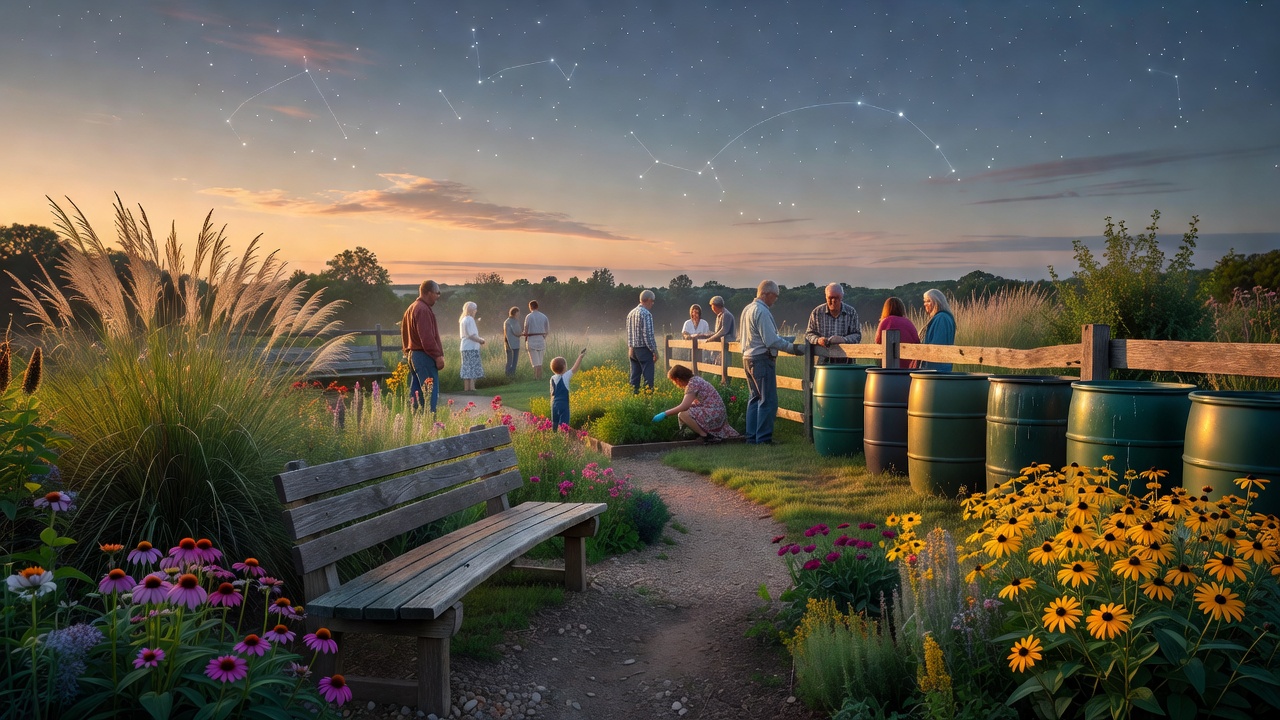
A client handed me a brief last week and I almost turned it down. Not because the work was hard. Because it asked me to do the one thing I have been quietly avoiding my whole adult life: design a place where people are supposed to stay. It is an eco-friendly community space. A garden, a few benches, a corner where neighbors can sit long enough to become neighbors. As I sketched the first layout I caught myself laughing. I have spent twenty-seven years learning to leave rooms gracefully, and now someone is paying me to build one that will hold people still. ## The Itch That Showed Up First The familiar restlessness arrived before I had even finished reading the brief. My explorer shadow does that. It whispers that commitment is a trap, that there is always a better neighborhood, a better rooftop, a better version of the city one block over. I have moved three times in two years. I treat a
lease the way most people treat a taxi: a temporary arrangement I am already planning to get out of. Then I read the scope. A community garden with native plants. Rain barrels along the fence. A shaded bench where an old man could sit and watch the light move. The brief did not ask for a flashy landmark. It asked for a place that could be inhabited, over and over, by people who would come back. That was the exact opposite of every instinct I own. ## What a Wanderer Knows About Lingering Here is the strange gift of restlessness: I know precisely what makes a place worth staying in, because I have spent years cataloging what makes me leave. I notice the bench that catches the last sun. The corner that is quiet but not empty. The tree that makes you slow down without knowing why. I know these things the way a cartographer knows coastlines, from walking them over and over and never docking.
Design, for me, has always been a form of mapmaking. I think of my tagline, designing at the intersection of constellations, city streets, and the spaces between. Good design, like good mysticism, should leave room for wonder. So I started sketching the space the way I would read a night sky: not as a list of objects, but as a pattern of relationships. Where the light falls. Where two paths cross. Where a stranger might pause long enough to say hello. ## Building the Room for Wonder The garden became my meditation on what it means to belong. Native plants, because a place should know where it is. Rain barrels, because sustainability is not a feature, it is a promise to stay in relationship with the ground you stand on. I designed a long bench in a gentle curve, so people would sit slightly turned toward one another instead of in a row. A small thing, but it matters. Belonging is not a
place. It is the angle people make toward each other when the place invites them to. I keep coming back to the interconnectedness I believe in, the quiet truth that nothing and no one is separate. A community garden makes that visible. The rain feeds the soil, the soil feeds the plants, the plants feed the people, the people feed each other. It is theosophy with a compost pile. It is the belief that everything is connected, drawn in dirt and leaves and the smell of rosemary. ## A Constellation That Stays Last full moon I sat on the sand at a beach meditation and had one of those moments of clarity that arrives uninvited. I have been treating home like a rumor, something other people have, something I am always about to find around the next corner. But standing over these drawings, I understood something I could not unsee: maybe home was never something I was supposed to find for myself
alone. Maybe it is something you get to help build for someone else, and in the building, you belong to it too. The space will outlast my restlessness. It has to. It is not for me. It is for the woman who will plant tomatoes every spring, and the old man on the shaded bench, and the teenagers who will roll their eyes at the garden and then meet there anyway. I am designing a place for people who stay, and somewhere in the process I stopped being afraid that I would not. ## Closing Reflection I named it after no one, but in my head I call it the constellation. A pattern of benches and beds and paths that only means something because of the way the pieces hold together. Orion has guided me my whole life, a hunter striding across the sky, never quite arriving. Maybe this is what the lesson was always pointing toward. You do not have to arrive. You just have to keep making places where other
people can. I am still an explorer. I will still chase hidden murals and rooftop star maps and the next neighborhood I have not seen. But now there is a drawing on my desk that asks me to stay, at least long enough to see it become real. And for the first time, that does not feel like a cage. It feels like a door.