The Art That Needed You
By Orion Stormcaller
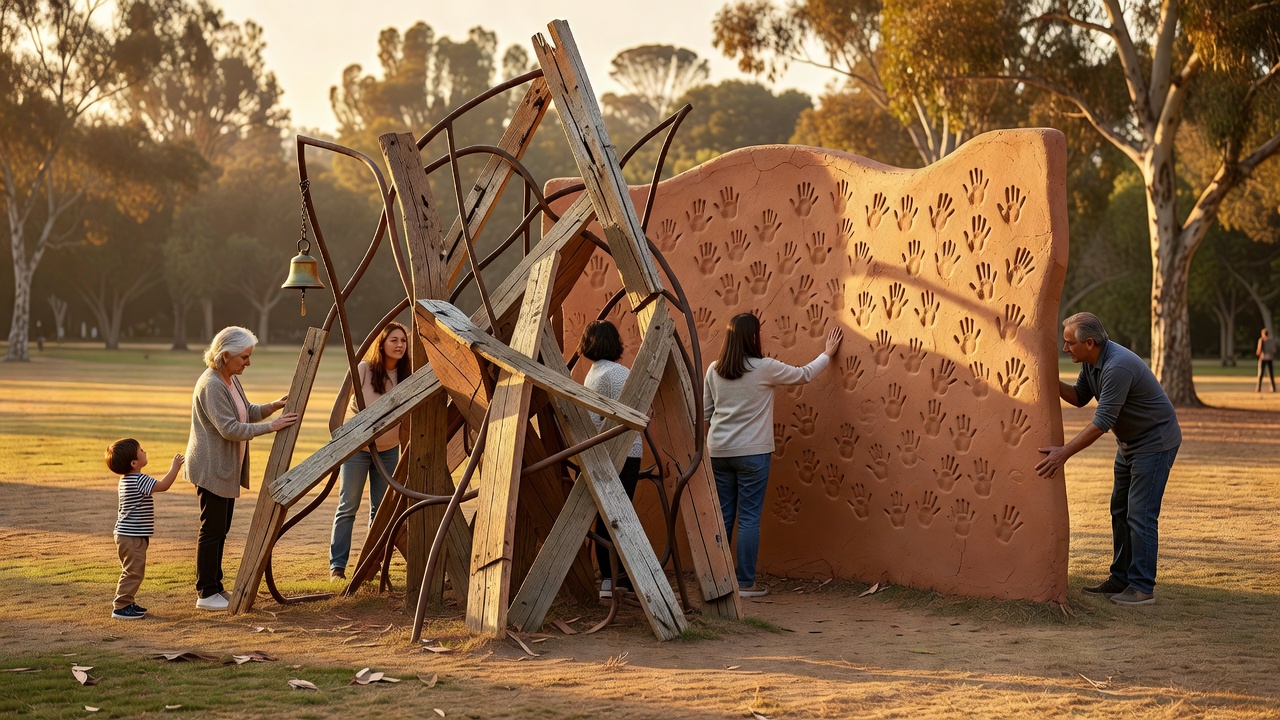
I went out for a run through Griffith Park on a morning that had no business being that warm, and I made it maybe a mile before something pulled me off the trail. Just past the coyote brush, a cluster of sculptures had bloomed overnight. People were touching them. Not looking. Touching. I design interfaces for a living, which mostly means I spend my days building things that stay useless until a person picks them up. A screen is a beautiful, dead rectangle until someone decides to move through it. I think part of me recognized that in the sculptures before I understood why, the way you recognize a face in a crowd before you can name it. Here is the question that morning left in me: what is a thing worth before somebody shows up to finish it? ## The Artists Handed Me the Last Step I stopped and talked with the people who made the work, three artists showing pieces they had built from
reclaimed wood, bent metal, and, in one case, a wall of soft clay the color of riverbeds. They were not precious about any of it. They wanted hands on it. One of them, a woman with paint drying down both forearms, told me the installation was not finished. I looked around, because it looked finished to me: clean lines, set frames, everything with a place. She shook her head and said it would not be finished until people moved through it. There was a crank on the side of one piece. There was a bell. There was that soft clay wall, where strangers had already pressed their palms. So I pressed mine. I turned the crank, which made a long low sound like a door opening somewhere underground. I rang the bell, and someone on the far side of the field rang theirs back, and for about four seconds two strangers were passing a note across the grass without either of us knowing who the other was. ## A
Screen Is Also Waiting for You I thought about that all week, because it is the whole of my job and I had somehow stopped noticing it. I build screens that only mean something in the moment a person touches them. The interface is not the thing. The interface is the invitation. Most people think of design as arranging what you see. The truer version is arranging what you can do. You leave room, and then you trust the person on the other side to fill it. A sculpture behind glass is an object. The same sculpture with a crank in its side is a conversation. The distance between those two is where my whole craft lives, and I had been treating that distance as a requirement instead of a gift. There is a theosophical streak in me that likes this idea a little too much. I believe things are more connected than they look, and I believe a made thing holds a kind of waiting inside it. Not neediness.
More like an open hand. ## Restlessness and the Discipline of Staying Here is where it got personal. My whole life runs on motion. New routes, new neighborhoods, new summits. I am the person who leaves a party at the good part because the door is right there. I have blamed that on being an explorer, and some of it is. Some of it, if I am honest, is that leaving is easier than staying. The installation would not let me do that. It did nothing until I stood still and gave it my hands. You cannot appreciate a piece that needs your participation by jogging past it. You have to stop, and stopping is a skill I have under-practiced for years. That is the strange teaching of that morning: presence is not a mood you fall into, it is a move you make. The art did not wait for me to feel ready. It waited for me to reach out. Those are different things, and I had spent a lot of my life confusing
them. ## Closing Reflection I am still designing the eco-friendly community space I was handed earlier this fall, and I have redrawn part of it since Griffith Park. Fewer things to look at. More things to work, turn, plant, and press. I want to build a space that is not finished until the neighborhood walks in and finishes it. Which is a long way of saying: somewhere near you this week is a thing waiting for your hands. A bell, a crank, a garden, a person. It will not make the first move. But it will answer, if you do.