Meditation for Beginners: A Gentle Guide to Finding Your Stillness
By Phoenix Fateweaver
For twenty years I have been handing other people their calm. It is my job. Someone walks into my office wound tight as a clock, and I teach them how to breathe, how to soften their shoulders, how to notice the space between one thought and the next. I am very good at it. And for most of those twenty years, the one person I never once sat down and taught was myself. I am a fire person. The phoenix I write under is not an accident. My nature burns fast and bright, and for a long time sitting still felt like the exact opposite of living, like asking a flame to hold very, very still and please not flicker. So when I first tried to meditate, I did what most beginners do. I sat on a cushion, told my mind to be quiet, and lasted about ninety seconds before I had to stand up and pace. I decided meditation was simply not for people like me. I was wrong, and I want to save you the three years it
cost me to learn why. Meditation is not the art of emptying your mind. It is the art of returning to it. And if you are someone who cannot sit still, the door is not the cushion. It is movement. It is a garden. It is one breath, noticed, and then another. Meditation Is Not What You Think The myth that keeps most beginners from ever starting is the idea of an empty mind. You picture a monk perfectly still, thoughtless as still water, and you compare that picture to your own brain, which is currently replaying an argument, planning dinner, and humming a song you heard in a grocery store. Then you decide you are bad at meditation before you have even begun. That picture is a lie. Nobody's mind empties. The mind is a river, not a pond. Thoughts keep flowing through it no matter what you do. Meditation does not stop the river. It teaches you to sit on the bank and watch it instead of being
swept away. When you notice your mind has wandered, that noticing is not a failure. It is the entire practice. Every single time you bring your attention back, you have done one repetition of the only exercise that matters. I learned this the slow way. I kept waiting for the day my thoughts would finally stop, and it never came. What came instead was a quieter skill: I got better at noticing the drift sooner, and better at returning without scolding myself. That is what a meditation practice actually is. Not a blank screen. A muscle you strengthen by noticing, returning, and noticing again. Start With a Body in Motion For a restless person, sitting still first is like trying to run before you can walk. The gentler door is movement. I found it through Tai Chi, which I took up to help my body after years of leaning over other people's problems. Tai Chi is sometimes called meditation in
motion, and the first time I moved through the slow form I finally understood why: my mind was quiet, not because I had silenced it, but because it had something to follow. The form gave my attention a job. Follow the hand. Shift the weight. Breathe into the turn. When the mind has a moving anchor, it stops trying to bolt, the way a child stops running when you hand it something to hold. I started practicing with a group of seniors in a park, and I watched people decades older than me stand in that slow river of movement and come out the other side visibly softer around the eyes. You do not need Tai Chi specifically. Any slow, rhythmic movement works: walking without your phone, gentle stretching, swaying in place, even washing the dishes with your whole attention on the water. The point is to give your restless mind a simple, repeating motion to ride. Once you can rest your attention on
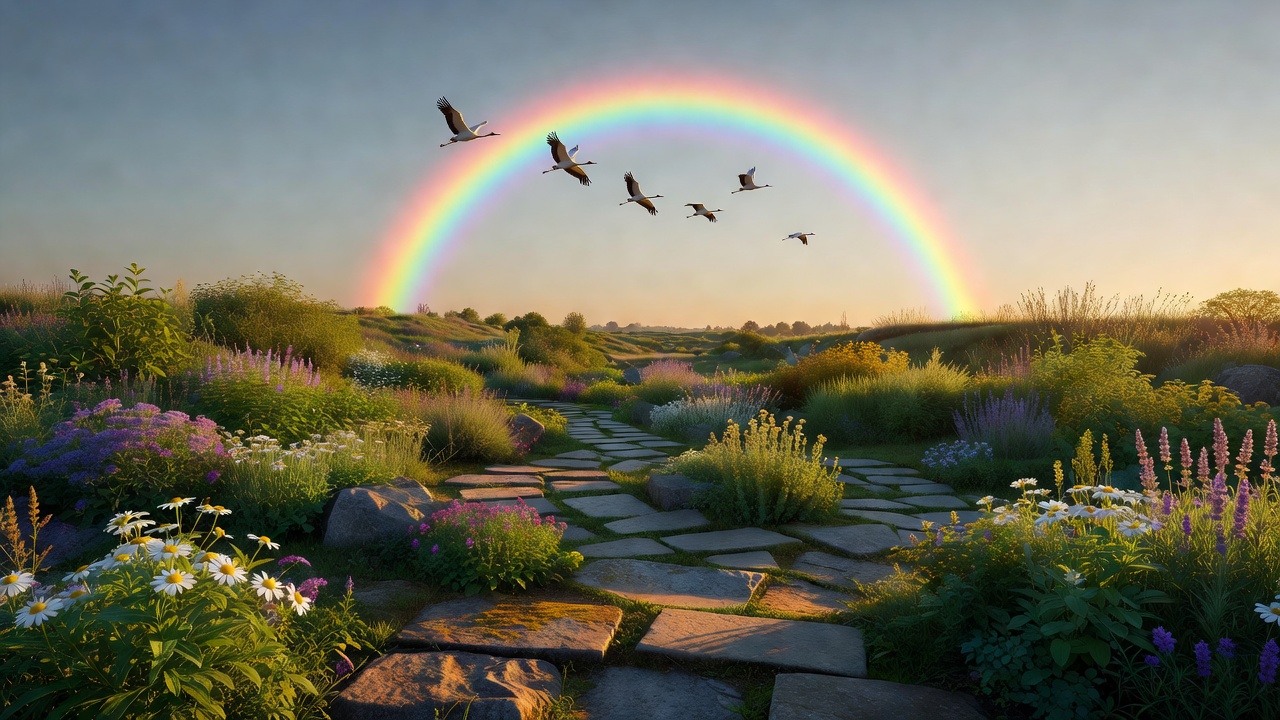
a moving anchor, the cushion becomes possible. Movement is not a detour around meditation. It is the on-ramp. The Garden as a Meditation Seat I also started a healing garden at the retreat center where I work, and somewhere in the middle of building it I found the other door. Outdoors, I could sit still without trying. There was too much to notice. The smell of turned soil, the heat on my arms, a lizard doing pushups on a warm stone, a line of cranes passing overhead while I held a trowel and forgot, for a minute, that I was supposed to be doing anything at all. That forgetting is the secret beginners miss. You do not meditate by gripping your attention. You meditate by letting it land on something real. A garden is full of real things, and they ask nothing of you. When I stopped treating stillness as a discipline and started treating it as a place to be, sitting still stopped feeling
like a punishment and started feeling like rest. If you have no garden, use what is outside your window. A tree, a patch of sky, the sound of traffic rearranged by distance into something almost like a tide. The content of what you notice matters far less than the noticing itself. Stillness is not a room you build. It is a direction you face. Five Practices to Try Tonight One, the breath count. Sit or stand, and count your breaths silently from one to ten, then start again at one. When you lose count, which you will, simply begin again at one without comment. That is the whole exercise, and it is enough for the first week. Two, the walking meditation. Walk slowly, any short path, and time your steps to your breath: two steps on the inhale, three on the exhale. Keep your eyes soft and let them rest on the ground a few feet ahead. This is the moving anchor, and it works on a restless day
better than any cushion. Three, the body scan. Lie down and move your attention slowly from the crown of your head to the soles of your feet, lingering a few breaths on each part. Do not try to relax anything. Just notice what is there. Tension usually lets go the moment it feels seen. Four, the sixty second reset. Set no timer longer than a minute. Sit, notice one full breath, and stop. Do this three times a day. Meditation is built from many small returns, not from one long heroic sit. Small and repeated beats large and abandoned, every single time. Closing Reflection Not long ago I stood in my garden after a light rain and watched a rainbow stretch over the beds, the kind of thing that shows up uninvited and asks nothing. I had spent years chasing stillness like a thing I could catch, and there it was, standing still while I stood still, because for once I was not trying to be
anywhere else. That is all meditation ever asks of you: to stop being somewhere else, for one minute, one breath, one slow walk at a time. You do not need a cushion, a mantra, or a quiet mind. You need only to begin, and then to begin again. The stillness was never missing. It was waiting for you to stop chasing it.