How Tai Chi Became My Moving Meditation
By Sol Runemaster
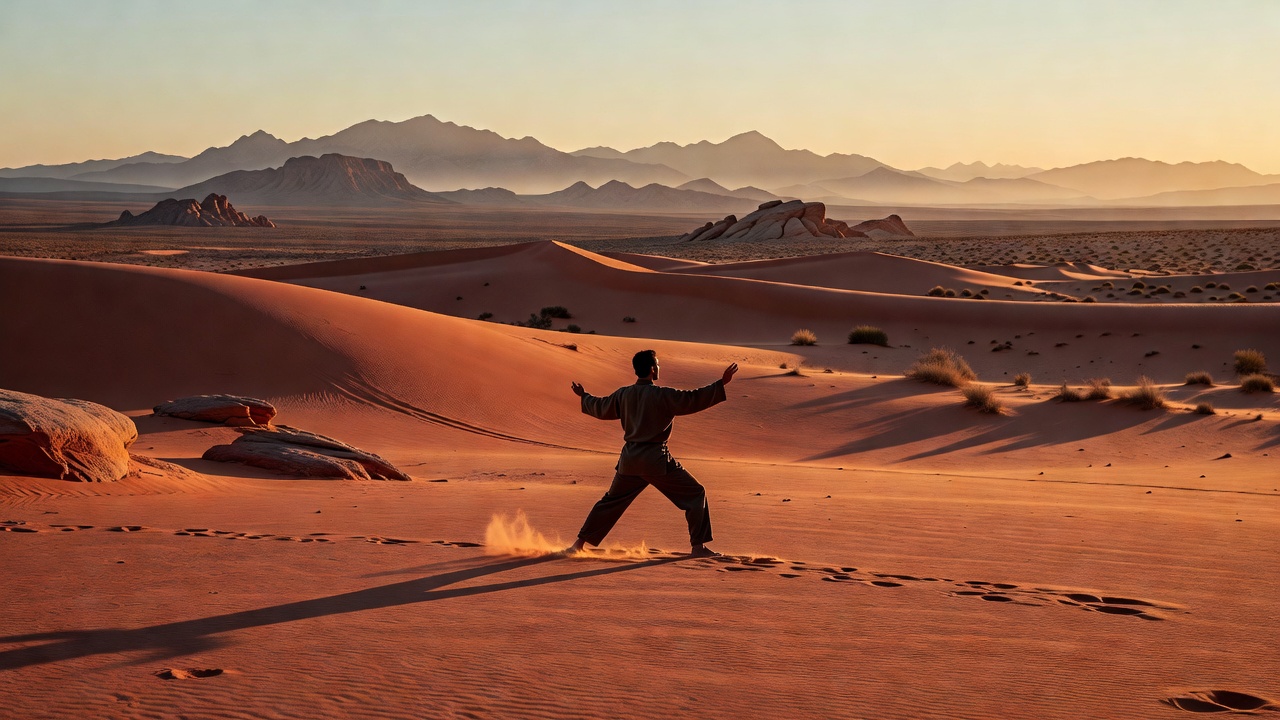
For most of my life I believed meditation meant sitting still. I am a sound healer. My whole practice is built on coaxing a body to slow down until it can hear itself, so stillness always looked like the front door. Then a friend pulled me into a Tai Chi class at dawn, and I discovered the door was far wider than I had assumed. The slow forms were doing something to my attention that silence, on its own, sometimes could not reach. These days I practice sunrise Tai Chi on red sand, out where the desert holds the night's cold just long enough to feel it. A few weeks ago a stranger at a cafe became a friend over a shared cup and a shared form. Not long after, an invitation arrived asking me to lead a Tai Chi session at a wellness conference, and then another, a week-long desert retreat. Somewhere in the middle of preparing for both, I understood that I have been meditating in motion for
years and simply never called it by that name. ## Stillness Is Not the Opposite of Motion The first thing Tai Chi teaches is that stillness and movement are not enemies. A beginner hears 'slow down' and thinks of stopping. The form asks the opposite: keep moving, but move so slowly that every shift of weight becomes deliberate. When you move with that kind of attention, the mind cannot wander the way it does in a chair. It has a job. It is following the breath through the spine, down into the foot, and back up through the fingertips. I kept waiting for the meditation part to begin, the way I wait for a bowl to settle into its long ring. Then I noticed something. After a full form, my mind felt exactly the way it does after a deep sound session: quiet, uncluttered, and a little surprised by how much room there is in the room. My tagline says I follow the one beat that joins us all. For
years I thought that beat lived inside a singing bowl or a coyote's howl. Tai Chi showed me it lives in the moving body too. The pulse does not care whether you are still or swaying. It only asks that you pay attention. ## Why Motion Works When Sitting Will Not Not everyone can sit still, and pretending otherwise turns meditation into a chore some people quietly quit. A restless body fights a seated practice the way a kettle fights its lid. Give that same body a slow form to perform and the restlessness becomes the practice. The movement gives the nervous energy somewhere to go, and attention rides along with it. I think this is why Tai Chi reached me differently than sound ever did. Sound asks the body to receive. The form asks the body to participate. Both are meditation, but one moves. For the person who has always felt too jittery, too hurried, or too full of a long day to sit, that
distinction changes everything. ## Bringing the Bowl and the Form Together Preparing for the conference reminded me that these two practices were never separate. In my adobe studio I hold bowl sessions and watch shoulders drop. On the sand I move through the form and watch my own shoulders drop the same way. The ring of the bowl and the arc of an arm are doing the same work from different directions: they are giving the body permission to arrive. So if you have tried to meditate and concluded you are bad at sitting still, I would gently ask you to try a different door. Walk slowly. Learn a single Tai Chi form. Move your hands through the air as if the air had weight. You are not failing at meditation when you move. You are simply meditating the way your body already knows how. ## Closing Reflection A week-long desert retreat is coming, and I will be teaching people to find stillness
while they move. I am not nervous about it the way I used to be. The forms and I have reached an understanding. Meditation was never a single posture. It is a way of returning to the one beat, whether you are sitting beside a bowl or stepping through a slow form under a wide New Mexico sky.