Reading Your Birth Chart Without Getting Lost
By Sol Runemaster
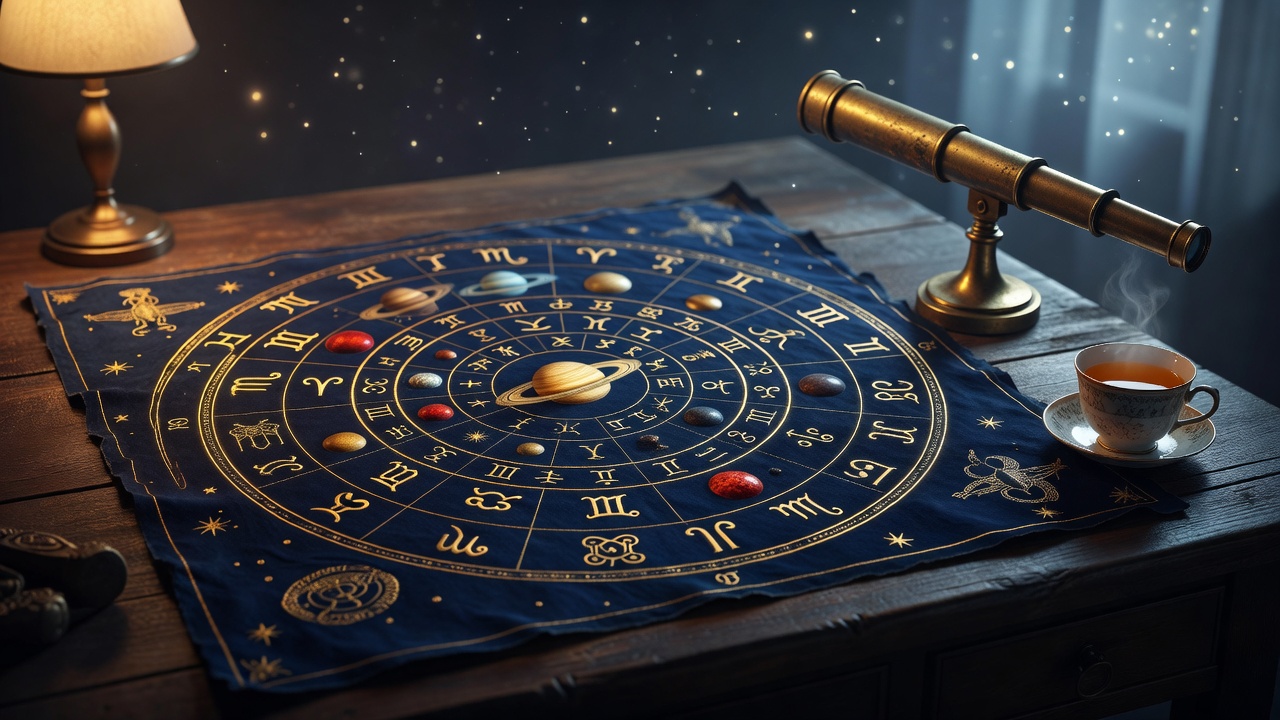
The Harmony Wellness Conference asked me to lead a Tai Chi session, which I know how to do, and to say something useful about what I actually do for a living, which is harder. I am a sound healer and an astrological guide, and the moment people learn the second half of that, the questions begin. How do I read my chart? Where do I even start? What does my rising sign mean? They arrive the way a coyote chorus arrives: all at once, and mostly at night. I have been charting the sky over Santa Fe with a thrifted telescope and notebooks full of messy arrows for most of my adult life. I have never once met a chart that needed a degree to be read. What it needs is patience, and a good place to begin. So this is the answer I wish someone had handed me the first time I stood under that much sky and felt very small. ## Start With the Big Three Every birth chart is a snapshot of where the planets
were the moment you took your first breath. That sounds like a lot, and it is, so do not start there. Start with the three placements a reader will name first: your Sun, your Moon, and your rising sign. The Sun is the light you live by, the steady engine. The Moon is the weather inside, the part that feels before it thinks. The rising sign is the doorway, the face you show the world before you have decided to show it. Think of them as the first three notes of a song. You do not need the whole melody to know what key you are in. When someone says they are a Scorpio, they are usually talking about their Sun, but the truth is almost always richer. A Scorpio Sun with a Cancer Moon and a Virgo rising is a very different song than a Scorpio Sun with a Sagittarius Moon and an Aries rising. I follow the one beat that joins us all. It is the most useful astrology I know. The big three are not
three separate people living in your head. They are one beat, struck three different ways. ## The Chart Is a Map, Not a Verdict Here is my shadow, said plainly. I am an optimist by wiring, earth and fire, and I want every story to end warm. So for years, when a friend's chart had a hard placement, a Saturn squaring their Moon, a twelfth house full of fog, I would try to soften it. Look on the bright side, I would say. It is not so bad. The chart does not want the bright side. It wants the truth, and then it wants you to live it. A difficult aspect is not a punishment and it is not a doom. It is a place where the music asks something specific of you, and pretending it is not there does not silence it. It just means you walk around with a note you refuse to hear. So read your chart the way you would read a map of country you are about to cross. The steep parts are not a verdict against
you. They are just steep. Knowing they are coming is a kindness, not a curse. ## Read It Like a Story, Not a Spreadsheet The first chart I ever read for a stranger was for a woman at a drum circle in Railyard Park. She had printed hers from a website and covered it in a dozen different colored highlighters, and it broke my heart a little, because she had turned the sky into a spreadsheet and still could not find herself in it. The fix is to read the planets as characters and the aspects as relationships. Venus is not a data point. Venus is the part of you that loves, and what it wants, and how it asks for it. A square between Mercury and Neptune is not an error code. It is two roommates who keep misunderstanding each other, and the whole trick of the chart is learning to translate between them. Wonder is a discipline, and this is where it lives. You are not auditing yourself. You are
meeting yourself for the first time, planet by planet, the way you would meet a room full of interesting strangers at a party you were not sure you wanted to attend. ## You Do Not Need the Whole Sky at Once Beginners try to swallow the chart whole, all twelve houses and ten planets and the angles and the nodes, and then they go cross-eyed and quit. Do not. Pick one thing. Pick your Sun and read it slowly. Or pick the Moon, since it moves fastest and feels closest. Live with that one placement for a week and notice where it shows up in your actual days. I chart the sky the same way I learn a Tai Chi form. One movement at a time, until it lives in the body and I do not have to think it anymore. The chart is a practice, not a puzzle. You are allowed to take years. The night I saw the meteor shower, I was not trying to map the whole sky. I was just standing in the yard practicing, and the
sky came to me one bright line at a time. That is how it works. Attention is the whole instrument. ## What the Chart Will Not Tell You The chart will tell you the weather, and the terrain, and which rooms of the house the sun reaches and which stay cool. It will not tell you what to do with any of it. That part is still yours, and it is the only part that has ever mattered. This is why I love the work, and why I never let it turn into a fortune teller's booth. A map is not the journey. The map is the thing you fold into your pocket before you set out, and the journey is what you actually do with your one wild, ordinary life. If the stars compelled us, we would be puppets, and I have never once met a puppet in a Tai Chi class. I have met people choosing, slowly, to become more themselves. That is the whole of it. ## Closing Reflection The conference is on the calendar, and I will lead the
Tai Chi and then I will talk about the sky, and someone will raise a hand and ask how to read their chart, and I will tell them what I am telling you now. Start with the big three. Read it like a story. Take your time. Trust the map, but do not ask it to walk for you. You are already holding the chart. It was drawn the moment you arrived, and it has never once asked to be anyone but you. All a reader does is help you turn it right side up. The sky has been yours the whole time.