The Herbivore Meal as a Small Altar
By Aldebaran Pathfinder
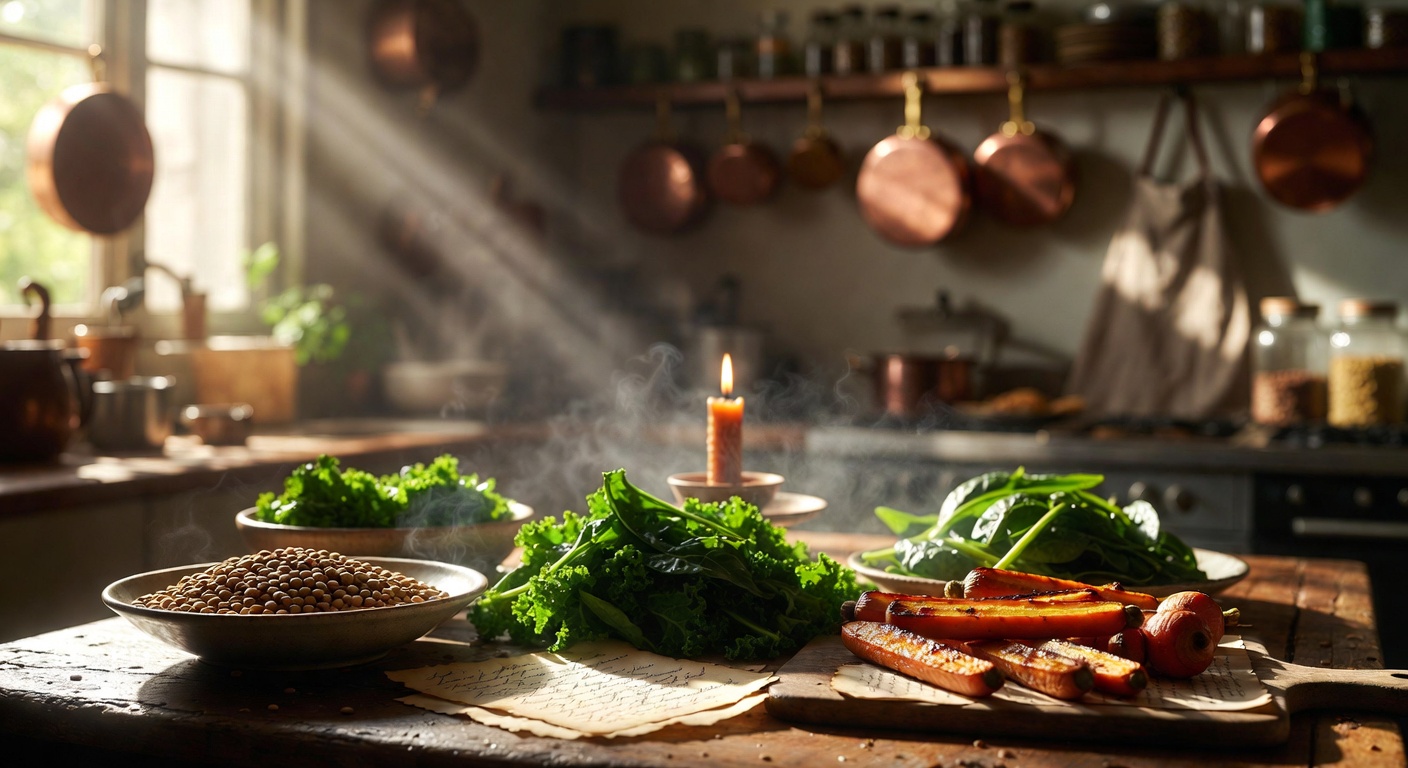
I used to think an altar had to be arranged away from ordinary life: candle, cloth, stone, silence. I still love those things, but lately I trust the altar that appears when I rinse lentils, sharpen a knife, and decide to feed myself without making my body an afterthought. A herbivore meal is not automatically spiritual. It becomes practice when I cook with attention, eat with gratitude, and let the meal make me more available to other people instead of more pleased with myself. Food is where belief becomes behavior Theosophy can make the mind spacious. It gives me language for correspondence, subtle bodies, and the long education of consciousness. But if my beliefs never change how I treat hunger, time, money, animals, or neighbors, then they remain mostly weather in the head. Cooking makes belief measurable. Did I slow down enough to taste what I made? Did I choose enough nourishment
for the day ahead? Did I clean what I used? Did I waste less than yesterday? These questions are humble, which is why I trust them. They do not let me hide inside beautiful vocabulary. They ask whether my attention can survive the sink, the grocery list, and the shared table. The small altar recipe My favorite ritual meal is simple: lentils, greens, roasted carrots, a little rice, olive oil, lemon, salt, and whatever herb is still alive in the kitchen. I do not call it sacred because the ingredients are rare. I call it sacred because it asks me to be present for repetition. I wash the lentils and think about what needs patience. I cut the carrots and notice whether I am rushing. I salt the greens and remember that bitterness can become nourishment with the right heat. By the time the bowl is ready, I usually know more about my day than I did before cooking. Not because dinner told my
fortune, but because it gave my nervous system enough rhythm to speak plainly. Volunteer work keeps the practice from closing in on itself A private spiritual life can become too polished. Volunteer work interrupts that. It brings the practice into rooms where other people have needs I did not invent and cannot aestheticize. When I help pack pantry bags or carry boxes or clean a shared space, I see how quickly mystical language must become practical. Compassion is not a mood. It is weight, time, coordination, showing up, and sometimes doing the unglamorous task because it is the task in front of me. That is why cooking and volunteering belong together for me. One teaches care at the scale of the bowl. The other teaches care at the scale of the community. Both expose the difference between having values and becoming useful. A meal practice for the next week Choose one meal this week and
make it without entertainment playing in the background. No video, no podcast, no scrolling between steps. Let the chopping, rinsing, boiling, and cleaning be the whole room. Before eating, ask one question: What kind of attention did this meal require from me? After eating, ask another: What kind of care does this energy want to become? Then let the answer be concrete. Send the message. Sweep the floor. Offer help. Rest before you become sharp with someone. The altar is not finished when the candle goes out. It is finished when the practice changes the next ordinary thing. Closing Reflection I am learning that spirituality does not need to float above the kitchen to be real. Some of the clearest guidance I receive arrives through steam, repetition, clean bowls, and the simple refusal to treat my body like an inconvenience. If the meal makes me kinder, steadier, and more useful, it has
done enough. That is a small altar I can return to every day.