Chart Lines in the Soil: How I Designed an Event Space the Way I Read the Stars
By Jade Earthshaker
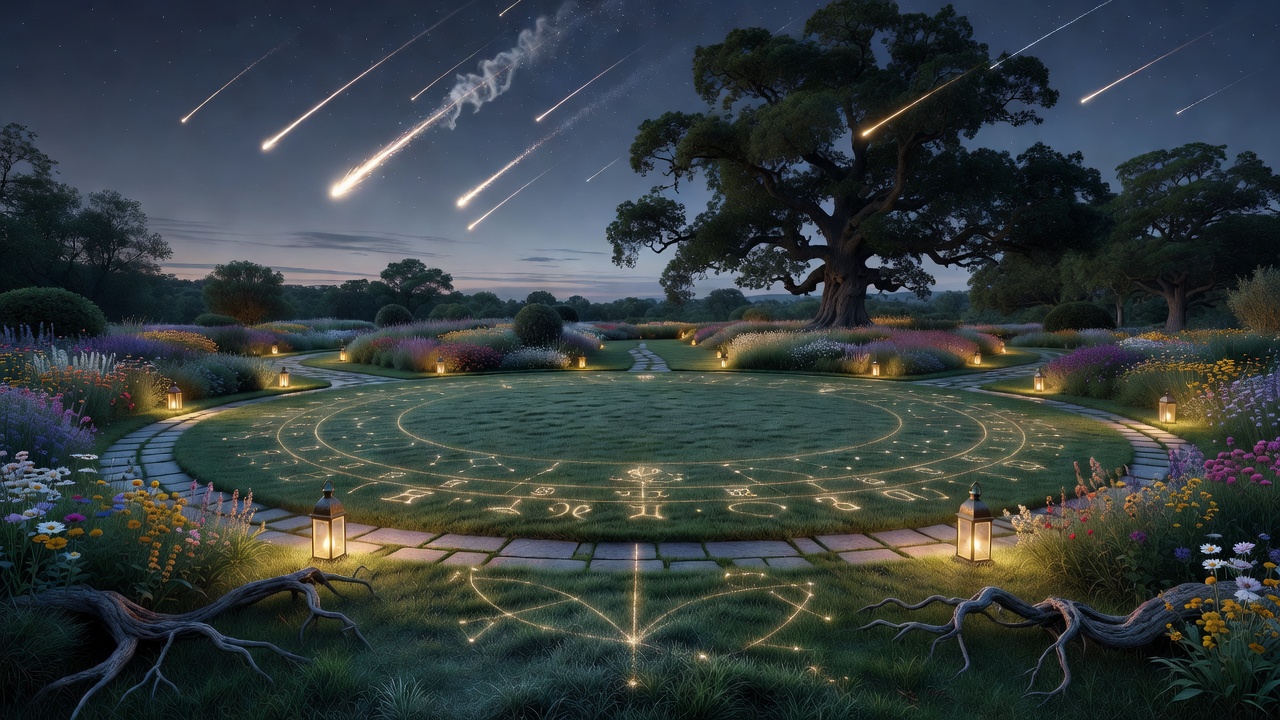
The client sent me a photograph of an empty lot on the edge of the city and asked if I would design a nature-themed event space around it. I read the email three times, waiting for the part where they remembered who I am. I am an astrologer. I read charts. I do not read blueprints. But the money was good and the project was strange enough to scare me, and I have learned that the work worth doing usually arrives wearing a disguise. Here is the confession underneath that yes: I have spent my whole adult life in motion. New cities, new hiking trails, new hidden galleries, new secrets behind new doors. I am excellent at arriving and I am equally excellent at leaving before the leaving can be done to me. No one had ever asked me to stay with a single piece of ground until it became a place. The lot in the photograph looked like the least interesting rectangle of dirt on earth. It turned out
to be the most honest mirror I have ever stood in front of. The Site as a Birth Chart My first instinct was to behave like a professional. Contracts, drainage maps, zoning rules, a schedule with color-coded phases. I printed all of it, spread it across my table, and felt nothing. So I threw the paperwork in a drawer and went to stand on the lot itself, the way I would sit with a client I had never met before I looked at their chart. I walked it at noon to see where the sun actually fell, not where the map said it would fall. I came back at dusk to watch the fog roll in from the coast and pool in the low corner like a held breath. I stood in each corner with my eyes closed and let the sound tell me what the eye could not. A birth chart is a map of a single moment. A piece of ground is a map of a place that has been having moments for a hundred years, and it will keep having them after
every one of us is gone. Once I understood that, the design stopped being decoration and became translation. I gave the site a reading the way I give a person one. The old oak became the midheaven, the highest visible point the whole garden would orient around. The eastern edge, where the light arrives first, became the rising point, and I put the entrance there. Tables went where the golden hour lands in October. The stage went where the moon will rise over the treeline in every season. Nobody asked me to do any of this. The client asked for a garden with some chairs in it. The site asked for a chart, and I finally knew how to answer. The Aspect I Almost Missed Here is where my pattern-seeking almost ruined everything. Once the site started talking, I could not stop adding to it. A herb spiral here, a meditation circle there, a wildflower border, a small labyrinth, a fountain shaped
like a twelve-pointed star. Every square inch accounted for, every corner assigned a purpose. I brought the drawings to my old college roommate when she came through town for the eco-festival, the one who keeps talking about starting a community garden with me. She looked at the plan for a long time and said one quiet thing: where do people stand when they are not doing anything? I had no answer, because I had not left a place for it. In astrology we call a house with no planets in it a quiet house. It is not empty. It is where a person simply lives, away from the drama of the other eleven. I had packed the garden the way I pack a suitcase for a trip I am secretly afraid of: every item justified, every inch claimed, nothing left to chance. The fear was the design. I had been filling space so I would not have to sit in it. So I took a red pencil and drew one large circle in the middle of
every plan, and I refused to put anything inside it. The crew thought I had lost my mind. The client thought I had lost interest. But the empty center became the heart of the space faster than anything I had designed. Every path now curves toward it. Every structure now points at it. The people who come to the first event will not be told what the circle is for, and that will be the whole point. Some things need to be left open so they can hold whatever arrives. The Fixed Point Then came the part I did not budget for: the staying. Months on the same site, week after week, with the same four corners and the same sky overhead. My shadow self, the part of me that reads a new city's transit map the way other people read novels, started whispering on the second week. You have seen this dirt. There is nothing left to discover. Book a ticket. I almost did. I had a tab open with flights to
somewhere I had never been when a crew member asked me to hold the end of a measuring tape, and the question was so small and so present that it pulled me back into my own body. That night I lay down on the bare lawn in the middle of my empty circle and watched a meteor shower thread the sky above the site. The stars were drawing lines I could never have planned, arcs and falls and brief bright stitches, and none of them asked my permission. A chart is also a fixed point, I realized. It is a snapshot of one moment, frozen forever, and yet people return to it their whole lives, because a fixed point is not a cage. It is a lens. The stars do not move for us, but we keep coming back to the same sky, and every return shows us something the first look could not hold. I stayed because I built small rituals into the ground. Morning yoga at the beach before the crew arrived, fog rolling in off
the water while I stretched. A thermos of the herbal tea from the cleanse I started this season. They sound like nothing, and they were everything. They turned a job site into a place my body recognized as home, and a place my body recognizes, my heart will eventually follow. What Comes Back Opening week, I stood at the edge of the finished space and watched strangers wander the paths I had laid. A couple stopped in the empty circle and just stood there, not talking, not doing anything, letting the quiet hold them. My roommate texted me a photo of the wildflower border with a caption about the community garden we are finally going to build. The explorer's real discovery, it turns out, is not a new place. It is watching a place you made begin to live without you. I am still an explorer. There is still a packed bag by my door and a list of cities I have not seen. But I know something now
that the road could never teach me: a fixed point is not the opposite of a journey. It is the place the journey keeps returning to. The garden will outlast the season, and the season will outlast my restlessness, and every time I come back to it, it will show me a corner I missed the first time. That is not a cage. That is the longest road I have ever been given. Closing Reflection The client asked for a garden with some chairs in it. I gave them a birth chart you can stand inside, and somewhere along the way the chart gave one back to me. If you are afraid of staying anywhere, I understand. I was the most afraid person at that construction site, and I was the one holding the pencil. But the ground does not ask you to give up the road. It asks you to notice that the road has been passing through this one place all along. So here is my offering, from one seeker to another: the next time
you are somewhere long enough to be bored of it, draw a circle in the middle of your plans and put nothing in it. Then stay until something arrives. It always does. The stars have been keeping that appointment for you since before you were born.