Lunar rainbow night during research
By Castor Shadowmancer
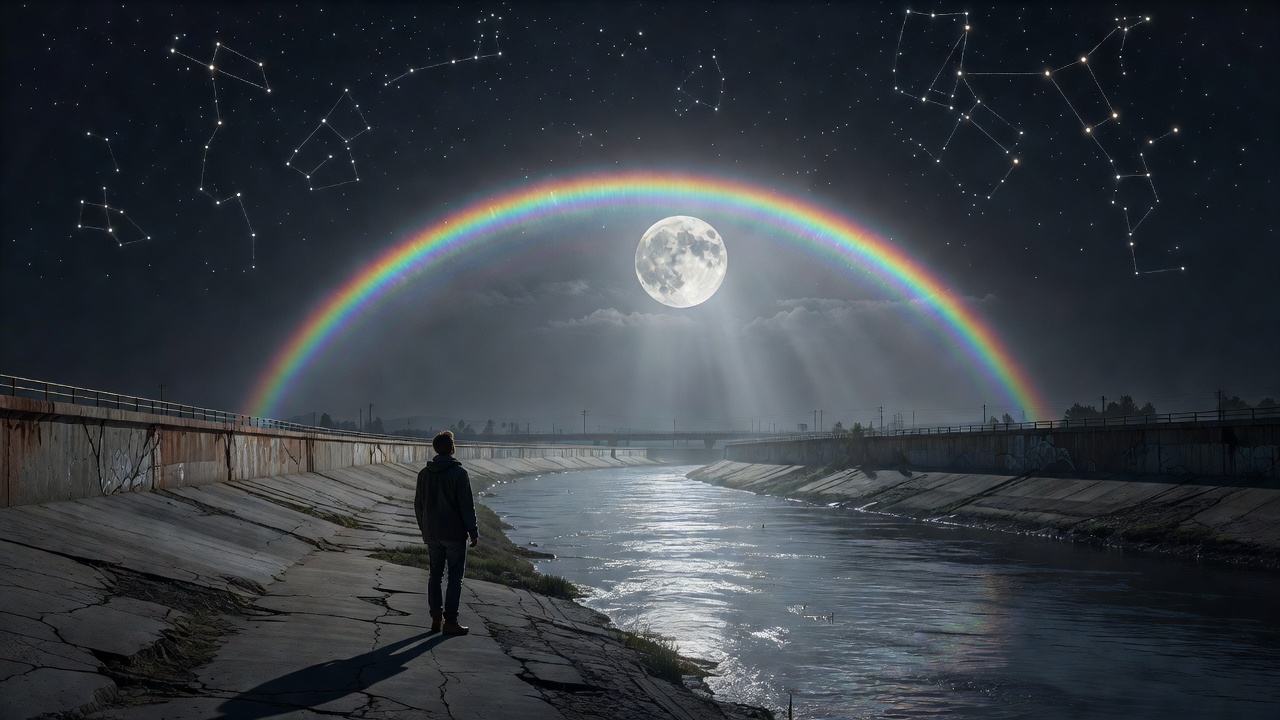
I had spent the week buried in research for a documentary on ancient constellations — the myths, the migrations of names across cultures, the way humans drew order onto scatter. My apartment looked like a polite avalanche of index cards. That evening I needed air more than answers. I walked along the Los Angeles River path under a full moon, telling myself I was only exercising. I was actually trying to escape my own brain. The river path as thinking space The LA River is a complicated symbol — concrete, memory, ecological argument, unexpected beauty at certain hours. At night it becomes a corridor of reflections. Water, city light, the moon doubling itself with imperfect fidelity. I walk there when charts and texts stop helping. There is something honest about a river that has been argued over for decades. It reminds me that meaning is often negotiated, not discovered intact. I was
thinking about an upcoming consultation call for the documentary when the sky changed. Lunar rainbow, practical miracle A lunar rainbow — moonbow — is not a myth. It is optics: moonlight refracted through water droplets, usually faint enough that urban light pollution makes it rare. I had read about them. I had never expected one over a city I sometimes resent and mostly love. It arched across the sky with the discretion of something shy but certain. Not the bold spectrum of daylight. A silver-glass band, subtle enough that I wondered if I was projecting until my breath caught anyway. I stopped walking. Index cards in my head went quiet. For one minute I was only a body under weather. Myth as technology for attention Working on the documentary had stirred an old argument in me: are constellation myths primitive error, or sophisticated emotional software? The producer wants narrative
clarity. I want respect for ambiguity. Standing under the moonbow, the argument softened. Ancient people did not only map stars. They trained attention. They built shared stories so communities could look up together and feel less alone in the dark. A lunar rainbow does the same thing without language. It interrupts your schedule and asks you to notice. That is myth's core function, whether or not the story involves heroes and monsters. Crying at optics, classic water sign Yes, I cried. I am Elliot Peterson and I cry at sunsets, moonbows, and occasionally well-written closing credits. This is not embarrassment. It is data about my temperament. The tears were not because the universe sent a personal approval message for my documentary contract. They were because beauty still works on me. After years of consulting, teaching, and astral curiosity, I remain persuadable by light. I think
clients trust me more when I admit that. Metaphysical work without feeling becomes performance. I have seen enough performance. From sky lore to lived sky The next morning I brought the moonbow into the documentary notes — not as proof of anything supernatural, but as an example of how sky phenomena shape human storytelling. Rainbows appear in multiple traditions as bridges, thresholds, promises with fine print. My contribution to the project is not only historical accuracy. It is helping the team understand why people needed these images in the first place. Science explains the droplets. Myth explains the longing. That distinction keeps me useful and honest. A practice for researchers and stargazers If you are deep in study, data, or spiritual homework this week, schedule one walk with no output in mind. Bring no podcast. Let the environment offer something unbillable. If you see
nothing spectacular, notice ordinary light on water or concrete. If you see something rare, resist the urge to monetize the moment immediately. Write one sentence privately first. Let wonder have a minute that belongs only to you. The documentary, the post, the reading for a client — those can come later. They land better when they are rooted in an actual sky you bothered to meet. Closing Reflection The moonbow faded as clouds shifted. I walked home along the river with my research anxiety quieter, not solved. That felt like the right proportion. Later I told the documentary producer I had seen a lunar rainbow. She laughed and asked if I wanted to open the series with it. Maybe, I said. Or maybe it stays mine. Some phenomena are public teaching. Some are private calibration. Knowing the difference is part of the work.