Tai Chi at Zilker taught me community
By Phoenix Fateweaver
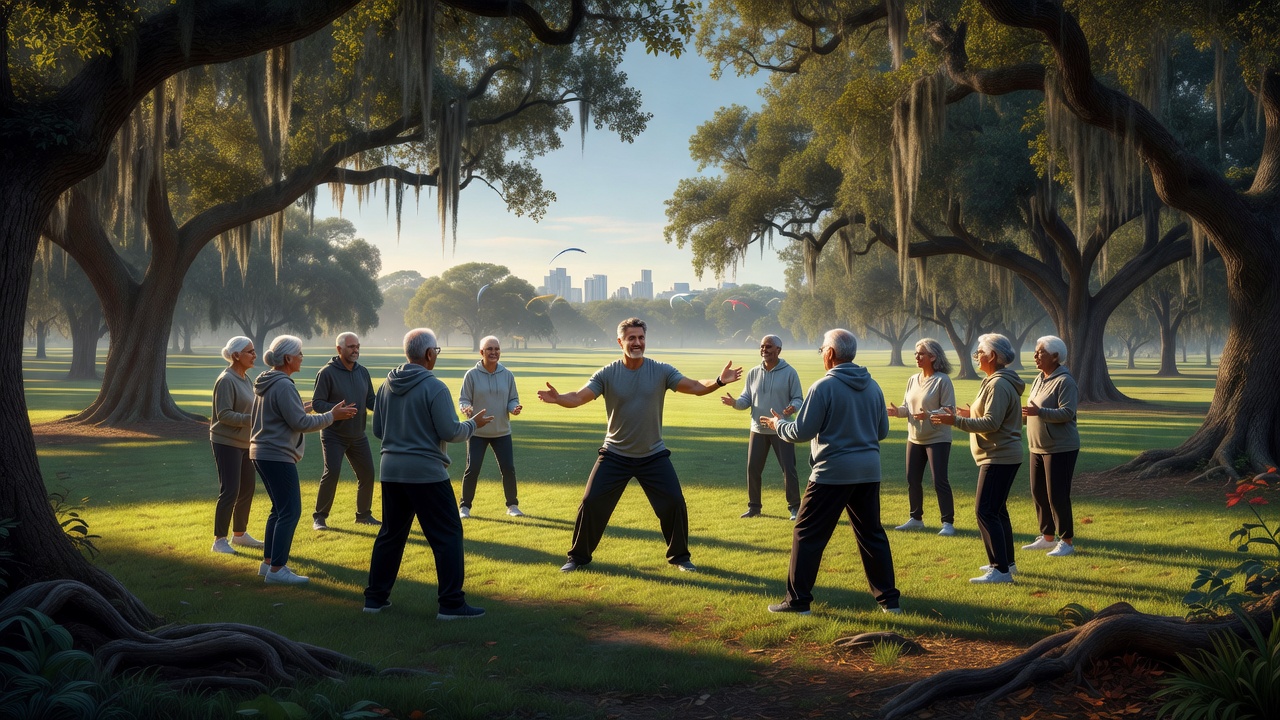
I went to Zilker Park that morning intending to practice alone. My Tai Chi group had canceled because of a heat advisory, and part of me was relieved. Caregivers are skilled at turning solitude into productivity, and I had a workshop outline to refine for the Hill Country Retreat Center. But the park had other plans. The live oaks were throwing shade like generous elders, and the grass still held a little coolness from the night. I had barely completed the opening form when I noticed three seniors on a bench watching with the polite curiosity of people who have seen many wellness trends come and go. One woman tapped her cane in rhythm with my weight shifts. I smiled, bowed slightly, and asked if they wanted to try the first movement. She laughed and said, only if you promise we will not have to levitate. Five minutes later we were seven people moving slowly together, and levitation was
not on the agenda. Slow Is Not Small Tai Chi looks gentle from the outside, which causes people to underestimate it the same way they underestimate listening. The first movement is not decorative. It is an agreement between breath, root, and attention. When I guided the group through raising the arms like lifting a tide, I watched shoulders that had been guarded for decades begin to lower without being ordered to relax. That is the magic caregivers chase: not forcing change, but creating conditions where change stops feeling dangerous. A man named Gerald told me he had not raised both arms above his head since a surgery three years ago. He did not raise them high that day either, but he raised them honestly, and the group applauded without making a fuss. I felt the familiar fire-and-spirit blend that defines my work: enthusiasm without performance, structure without rigidity. Phoenix
Fateweaver is not a stage name for me. It is a reminder that renewal can be incremental and still be real. The Caregiver Shadow in Plain Sight My archetype's shadow is neglecting self-care while tending everyone else. There is irony in a holistic coach forgetting to inhabit his own body. Tai Chi catches me every time. Halfway through the form I realized I was coaching breath cues while holding my own inhale like a deadline. Luna, my cat, would have judged me. I softened my ribs. The seniors mirrored it. Teaching is a mirror whether you intend it or be. After the session, a woman named Rosa asked if I offered classes for people with arthritis. I do, but not formally enough. We exchanged numbers. Community building, one of my primary practices, often begins as an unscheduled circle under trees. Austin makes that easy if you stop treating the city like a backdrop and start treating it like
a collaborator. Zilker is not a postcard. It is a living room with squirrels. From Park to Retreat Center The impromptu circle changed my workshop outline that afternoon. I had planned a segment on past life regression as the dramatic centerpiece. After Zilker, I moved slow embodiment to the opening slot. Regression work matters, but bodies need to trust the room before memories arrive. The retreat director had asked me to co-lead a series blending my regression expertise with the center's meditation lineage. I am honored. I am also aware that honor can become pressure if I forget the park lesson. I drafted new language for the invitation: come as you are, leave a little quieter inside. I added a note about chairs, shade, and permission to modify movements. Accessibility is spiritual work. So is humor. Gerald joked that he would return if I promised snacks. I promised oranges. Caregiving
is oranges and breath and showing up when the calendar says optional. Closing Reflection I still practice Tai Chi at Zilker when the heat allows. Sometimes the original group returns. Sometimes the bench circle reappears like a friendly ghost. I no longer assume solo practice is more pure. Community is not a distraction from mindfulness. It is one of its oldest delivery systems. If you are building a practice, a business, or a life, leave room for the unplanned circle. Slow movement can weave fates together without a single grand pronouncement. That is the Phoenix work: not rising from ashes in one cinematic moment, but warming the ground until something living decides to return.