The Artifact That Asked Me to Stop Decoding: What I Found When I Put It Down
By Aldebaran Pathfinder
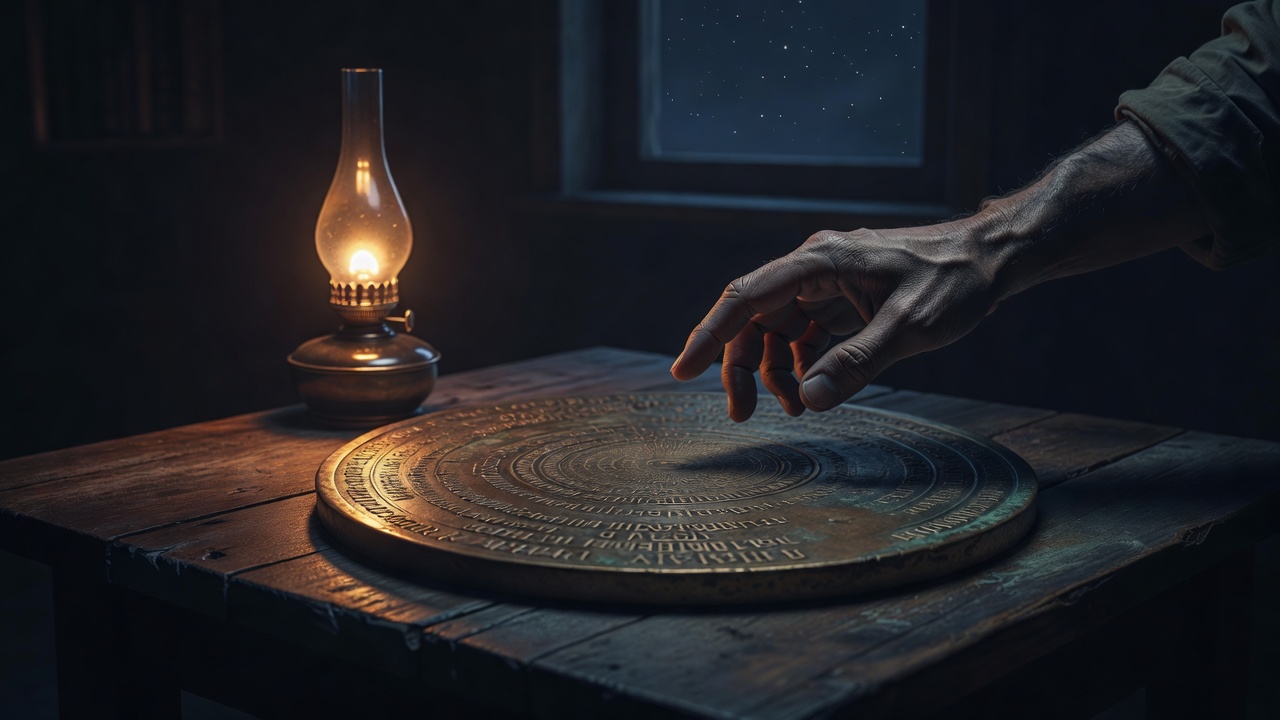
The bronze disc came out of a collapsed chamber on the third day of the expedition. It was the size of my open hand, warm even after all that time buried, and its face was covered in spirals that caught the lamplight the way water catches wind. I knew, in the way a reader knows the first line of a book, that this was what I had come for. What I did not know was how long that piece of bronze would hold me. I carried it back to camp, then home to the little room where I keep my charts, and I gave it every hour I had. I treated it the way I was trained to treat a difficult chart: as a problem with an answer waiting inside it. That was my first mistake. The Compulsion to Know Thirty years of reading charts taught me to trust the pattern beneath the surface. A birth time, a sequence of numbers, a line of symbols: they all hide a shape, and the shape is always trying to speak. So when the
spirals on the disc refused to resolve, I did what I always do. I made lists. I traced the grooves onto paper. I tried the angles of light that made the spirals appear to move. The disc was patient. I was not. I stopped sleeping properly, or rather I slept with the disc on the table beside the lamp, as if proximity would make it confess. A friend told me I looked like a man arguing with a stone. He was not wrong. That was the shadow of my own gift: the part of me that would rather overcommit to meaning than rest in the presence of a question. The explorer who cannot stand still long enough for the road to show itself. The Night I Put It Down The change came on a clear night when the meteor shower was at its best. I had planned to keep working, but the sky made its argument and I surrendered. I left the disc on the table, took my lantern, and walked out to the ridge where the abandoned
observatory still stands. I lay on the warm stone and watched the light fall for an hour. When I came back, the room was different. The disc sat where I had left it, but I saw it fresh, the way you see a familiar street after a long trip. I had been trying to read it as a sentence. It was not a sentence. It was a gesture, the way a hand can be a gesture: a spiral beginning in the center and widening outward, ending in a small mark like a footprint. The inscriptions had not changed. I had. Or rather, I had stopped gripping long enough for the object to speak in its own language. It was not asking to be solved. It was asking to be carried for a while. What It Finally Said I understand now that the disc is a record of movement, not a message. The spirals are paths walked. The small marks are places where someone stopped and looked back. It is less like a chart and more like a map of a
single life: the wandering out, the return, the long pause at the edge. This sounds small. But for someone who has spent thirty years turning symbols into answers, it is a door. I have begun reading charts the same way. Not for the verdict, but for the motion: where a person is circling, where they have paused, where they might be ready to look back. The lost city map was decoded with ink and patience, and that was right. The disc asked for something else: presence. Some things are found by digging. Some things are found by sitting still long enough that they lean toward you. Closing Reflection The disc sits on my shelf now, beside the lamp. I still do not know what it says, not in the way I know what a chart says, and I have stopped apologizing for that. Not every inscription is an instruction. Some are invitations. The difference is only in whether you are willing to stop decoding long
enough to hear. If you have something in your life that will not resolve, that keeps its spirals to itself, consider putting it down for a night. Walk out under the falling stars. Come back and look at it the way you would look at a friend who is waiting to speak. You may find, as I did, that it was never hiding an answer. It was waiting to give you a companion.